The three-tier wedding cake is quietly losing ground at Bay Area weddings. Not because cake has failed; guests still want dessert. What has happened is that couples have realized the cake is a design statement, not a food event. Almost nobody eats the cake at scale. So Bay Area couples in 2026 are pairing a small ceremonial cake with a real dessert program that guests actually finish. This is a working perspective on what is replacing the tier cake, what it costs, and what makes it worth doing.
The honest math on wedding cake consumption
The catering data from Bay Area full-service caterers is consistent. At a wedding with a full three-tier cake plus a real dessert bar, roughly 30 to 45 percent of the cake is eaten. At a wedding with only a cake and no other dessert, guests eat 60 to 70 percent. Cake alone at a large wedding is not enough dessert; guests want variety and volume. But when you add other desserts, the cake is largely ceremonial.
Couples who realize this early save money and end up with better parties. A ceremonial two-tier cake at $6 to $10 per serving-slice, sized to your guest count, plus a real dessert program running $5 to $12 per guest, produces a stronger dessert experience than a $12 to $18-per-serving five-tier cake on its own.
Doughnut walls: overhyped and still working
The doughnut wall is at its peak-cliche moment and still delivers on the wedding day. Fresh Bay Area doughnut sources include Dynamo Donut, Bob's Donuts, and Sabina's; a wall of 100 doughnuts costs $250 to $400 for the doughnuts, plus $200 to $400 for the wall structure rental. Total under $800 for a photogenic dessert moment that guests actually eat all of.
The doughnut wall's specific advantage is that guests can grab and walk. No plates, no forks, no service. At a wedding with 150 guests and one hour of open dance floor, guests want a dessert they can fetch in 45 seconds and take back to the dance floor. The doughnut wall solves this exactly. Pair it with a coffee bar and it becomes a self-service dessert station that runs itself.
Tres leches, and the case for a single Latin American dessert
For weddings joining Mexican, Cuban, or broader Latin American traditions, a tres leches program is quietly one of the strongest desserts at any Bay Area wedding, in any tradition. A well-made tres leches at $6 to $9 per portion, sliced and plated tableside or offered self-service on a decorated tray, gets finished. Guests take seconds.
The lesson generalizes beyond tres leches. Every wedding benefits from one dessert that is regionally or culturally specific to at least one side of the family. It reads as intentional design rather than default choice, and it lands better with the older generation than any French pastry or generic mini-tart. Ask each family for their most-loved dessert; that answer is your headline dessert item.
The mochi bar and Bay Area Asian dessert options
A mochi bar with six to ten flavors from a serious source (Third Culture Bakery, Susu, and Boba Guys all handle wedding orders) runs $4 to $8 per guest and photographs beautifully. Almond jelly, black sesame panna cotta, or a matcha-flavored cake replaces the traditional tier for weddings on the Asian-American side. Kaya jam pastries or a durian-cream puff selection push further into specific traditions.
The reason this works: guests who see a mochi bar know instantly that someone in the family cared about the dessert being a cultural expression. That signal is more valuable than any generic upgrade. Skip the fondant flowers; put a mochi bar in the room.
Gelato and ice cream carts
A summer or fall Bay Area wedding with an outdoor reception rewards a gelato cart. Xanath Ice Cream, Humphry Slocombe, and various single-flavor artisanal makers all book weddings. Expect $6 to $12 per guest for cart service, including staff, three to five flavors, and enough scoops for two servings per guest.
The gelato cart doubles as a photo moment. Guests will line up, chat, and take photos more than at almost any other station. Position it near the dance floor and it becomes a natural break spot that keeps the party's energy circulating. Consider adding one savory option (a bourbon-brown-butter or an olive oil gelato) for guests who do not want sweet.
Pie tables and California farm-driven desserts
For weddings at Marin, Sonoma, or Peninsula farm venues, a pie table using seasonal Bay Area fruit reads native to the location. Three Babes Bakeshop, Mission Pie's successor bakeries, and various local pastry programs offer wedding pie service at $5 to $9 per slice. A table of six pies (one apple, one pear, one seasonal berry, one lemon curd, one pecan, one chocolate) covers 150 guests with variety.
The ceremonial cake, done right
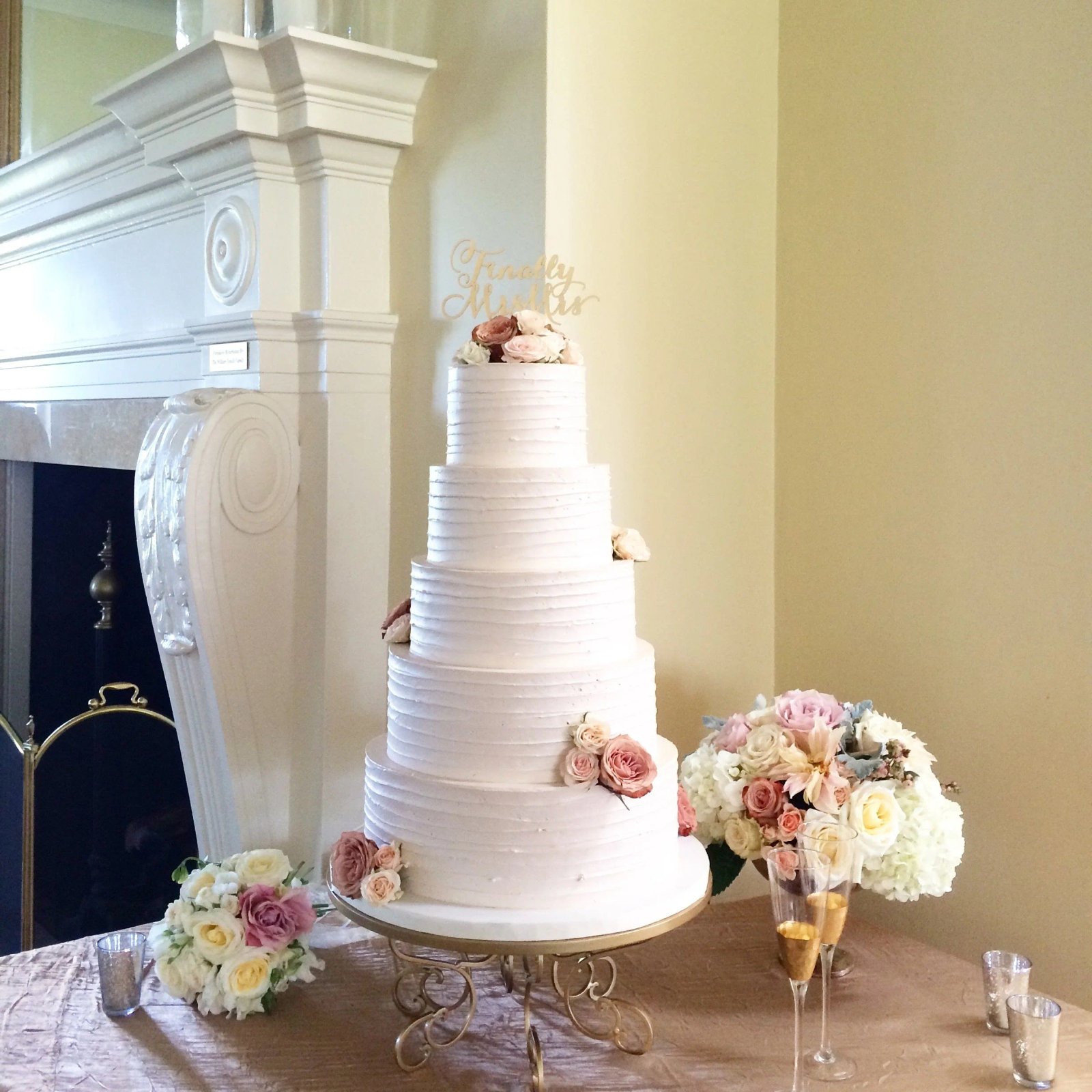
None of this is an argument to skip the cake entirely. The ceremonial cake is a wedding tradition worth keeping; it is the cake cutting moment, the photos, and the small piece that gets fed to the couple. The tradeoff is size. A two-tier ceremonial cake sized for 40 servings (enough for the cake cutting and any guests who specifically want a slice) at $6 to $10 per serving is $240 to $400, versus a full-guest-count tier cake at $1,200 to $2,700 for the same 150 guests.
The saved budget goes to the actual dessert program. That is the whole equation. A photogenic small cake and a real dessert experience beats a large cake and one dessert every time on the guest-side experience. The cake photo you have posted a year later will look identical.
The 2026 working answer
For a 150-guest Bay Area wedding, budget $250 to $500 for a ceremonial cake and $900 to $1,800 for the paired dessert program (a doughnut wall or gelato cart plus one cultural dessert plus a coffee service). Total dessert spend: $1,200 to $2,300. That is roughly the cost of a traditional full-tier cake alone, with more variety, more consumption, and more moments guests actually remember. The cake is not going anywhere. It just needs to share the table.
Browse Vendors