7:45 a.m. A rental truck backs up to the ceremony lawn, and two people unload a hexagonal wooden arch in pieces. By 4:00 p.m., that frame will sit behind every vow, every kiss, and most of the family photos. What happens in the eight hours between decides whether it looks like the picture you saved or like something that fought the site all day.
Following one hypothetical ceremony backdrop from delivery to teardown is a useful way to see which choices matter. The times below are illustrative, not a schedule to copy, but the decisions at each stage apply to almost any Bay Area outdoor ceremony.
Morning: Delivery and Placement
8:15 a.m. The planner and venue coordinator walk the aisle and confirm where the arch will stand. This is the most important decision of the day, and ideally it was made weeks earlier during a site visit at the same hour as the ceremony. The question is not only what looks good from the guest chairs. It is where the sun will be at 4:00 p.m., which direction the wind usually blows, and what sits behind the couple in the photographer's frame.
A backdrop that faces guests with the sun directly behind it can leave the couple in silhouette and guests squinting. One positioned so the couple stands in open shade or with the sun to the side tends to photograph more evenly. Your photographer can often tell you the best orientation for a given venue, so ask before the placement is final.
- Confirm placement during a site visit at your ceremony time, not only in the morning.
- Ask the venue about prevailing wind direction during your window.
- Check what will appear behind the arch from the photographer's position.
Midday: Anchoring and Florals
10:30 a.m. The rental team assembles the frame and anchors it. On a hilltop vineyard or coastal lawn, this step matters more than any floral choice. Freestanding arches can lean or tip in a strong gust, and draping fabric acts like a sail. Rental companies often use weighted bases, sandbags, or ground stakes, depending on what the venue permits. Ask your rental company and venue which method will be used and whether the surface allows stakes.
11:30 a.m. The florist arrives. Asymmetrical installations, with florals clustered on one or two corners, have become popular partly because they are lighter, faster to install, and leave more of the view open. Full floral coverage creates a dramatic wall but adds weight and cost, and blooms in full afternoon sun can wilt before the ceremony begins. Your florist can suggest hardier flowers and greenery for exposed, warm sites.
1:00 p.m. Fabric goes up if it is part of the design. Light chiffon looks soft and romantic in photos, but it moves constantly in wind. Many florists and planners secure fabric at several points or choose heavier materials for exposed sites. If you love movement, some flutter can look beautiful on camera; the goal is to choose it, not be surprised by it.
Afternoon: The Last Check
3:15 p.m. The planner does a final walk. Petals have fallen, fabric has shifted, and the sun has moved since morning. A five-minute reset here, straightening stems, re-tying fabric, and sweeping debris from the ground, shows up in every ceremony photo. Assign this check to your planner or day-of coordinator so it happens without you thinking about it.
3:30 p.m. The officiant and photographer confirm positions. The officiant typically stands just in front of the arch, and many photographers prefer that the officiant step aside for the kiss so the frame is clean. This is easy to arrange with a quick conversation, and it is much harder to fix once the moment has passed.
When You Do Not Need an Arch at All
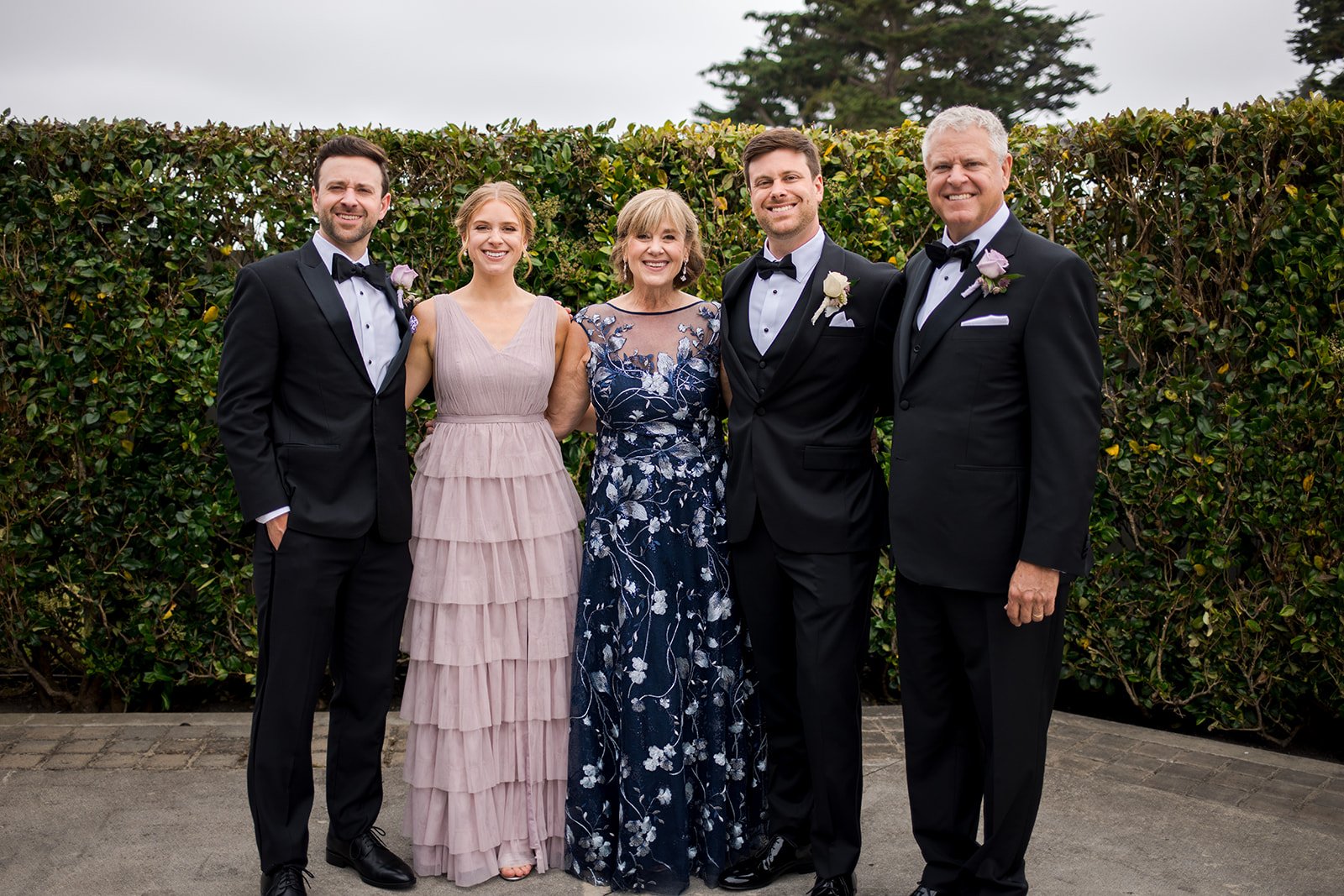
Not every ceremony needs a built structure. Many Bay Area venues already have strong natural backdrops: a row of mature oaks, a redwood grove, a vineyard row, a historic facade, or a tall clipped hedge like the one in the photo above. In those cases, a few floral arrangements at ground level, or nothing at all, can let the site do the work and reduce both cost and setup time.
Consider the alternatives your site allows.
- Ground arrangements or floral meadows along the front of the ceremony space.
- A pair of large urns or pedestals flanking the couple.
- A simple frame or circle that outlines the view instead of covering it.
- Existing architecture, such as a doorway, staircase, or archway at the venue.
Evening: Repurposing and Teardown
5:00 p.m. During cocktail hour, many florists move ceremony arrangements to the reception, often behind the sweetheart table or at the bar. If you want this, plan it in advance, because the move takes people and time, and some installations are built to stay in place. Ask your florist what can be repurposed and who will carry it.
10:30 p.m. Teardown. Confirm with your venue and rental company when the arch must be removed and who is responsible. Some venues require ceremony structures cleared the same night, while others allow pickup the next morning. Knowing this early prevents a late-night scramble.
A backdrop that fits the site rarely happens by accident. It comes from a few early conversations about sun, wind, and what the camera will see. If you are still building your ceremony team, browse Bay Area florists, rental companies, and venues on BayAreaWeddings.com and ask each one how they handle backdrops at sites like yours.
Browse Vendors