If you’ve been saving bouquet inspiration for months, you’ve probably noticed two things: Bay Area brides are getting more “editorial” with shape, and they’re also getting more practical about seasonality, re-use, and what will hold up in wind and sun. The good news? 2026 bouquet trends here are less about one “right” look and more about building a bouquet that matches your venue, your outfit, and your photo style.
Below is what we’re seeing across San Francisco, Napa/Sonoma, and the greater Bay Area for 2026 — plus the local “gotchas” (fog, heat, wind, and travel) that can quietly make or break your bouquet on the day.
A quick note: trends move fast, and every floral studio has different sourcing relationships. Always confirm the current flower availability, pricing, and “what holds up outdoors” guidance with your florist.
1) The ‘airy’ bouquet: intentional negative space (not messy)
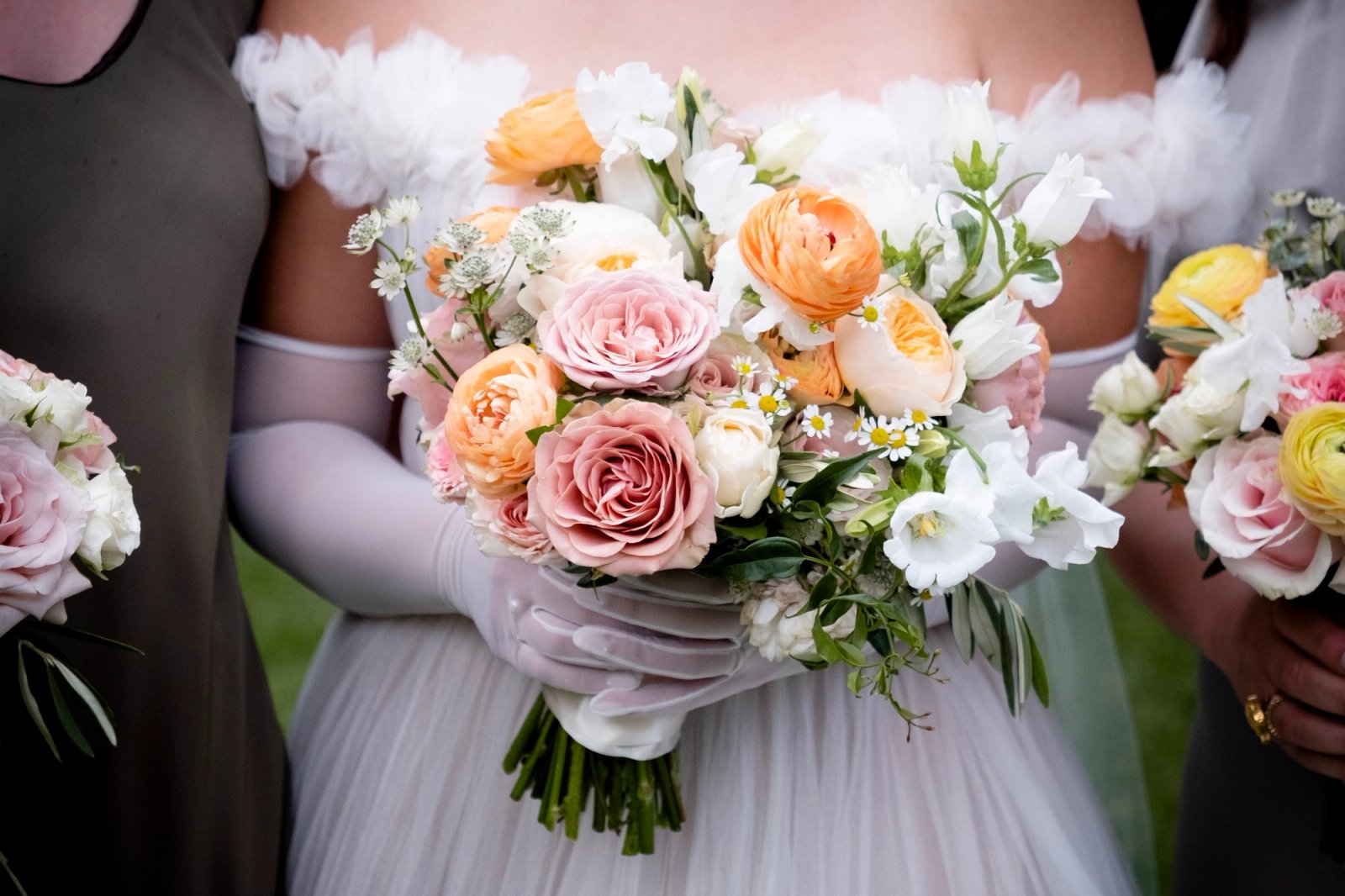
The most common Bay Area look we’re seeing for 2026 is the airy, movement-forward bouquet — often with visible stems, varied heights, and small pockets of “breathing room.” Lafayette Florist describes this shift as moving away from a tight, round bouquet toward an organic, airy shape with intentional negative space and delicate blooms like poppies, cosmos, stock, and sweet peas.
Bay Area-friendly tip: this style photographs beautifully at venues with big architecture (City Hall, historic mansions, wine caves) because it doesn’t compete with the background. But it also needs a florist who’s good at structure — airy doesn’t mean fragile.
2) Monofloral and mono-botanical bouquets (simple, modern, high-impact)
Minimal doesn’t mean plain — in 2026 it often means using one flower variety (or one botanical “ingredient”) and letting shape do the work. Lafayette Florist calls out monobotanical bouquets as a bold statement (for example: all tulips, all orchids, or all roses). The Knot also highlights monofloral/monochrome moments as a major 2026 trend.
This trend works especially well for modern venues (gallery spaces, rooftop terraces, contemporary wineries) and for couples who want their bouquet to read like a fashion accessory.
3) Sculptural + architectural flowers (callas, orchids, and long lines)
If 2024 was peak “wildflower meadow,” 2026 is a little more intentional and sculptural. Poppy’s 2026 trend roundup calls out architectural, free-form bouquets and notes big moments for calla lilies and orchids (with a general move toward designs that read like art installations rather than just decor). The Knot similarly frames 2026 as both architectural and organic, with long-stem, exposed-stem bouquets and sculptural designs.
Local note: this is a great direction for San Francisco City Hall, where dramatic columns and wide staircases can “swallow” a small, round bouquet. Long lines and a few statement blooms stay legible in photos — even from far away.
4) Warm neutrals + earth tones (and the Bay Area twist)
After years of cool blush and dusty blue, we’re seeing palettes warm up. Poppy notes a shift toward warm earth tones and neutrals in 2026 (think mocha/toffee/cappuccino tones, terracotta, and warmer pinks). In the Bay Area, this translates well at redwood venues, coastal cliffs, and wine country properties — warm palettes feel grounded against natural backdrops.
If you love color but don’t want it to feel trendy, consider a neutral base (ivory, sand, warm white) with one controlled accent (rust, berry, deep plum, or butter yellow) — and let texture do the rest.
5) Sustainability that’s actually practical: repurposing and bud vases
Sustainability in Bay Area weddings is less about “dried everything” and more about smarter labor + re-use. Poppy describes repurposing ceremony-to-reception florals as a standard 2026 practice, not just a budget hack. The Knot’s 2026 trend list also includes “small bouquets all around,” which aligns with bud vases and small arrangements that can be moved, re-used, and even taken home.
If you’re choosing bouquet direction with sustainability in mind, ask your florist these two questions:
- Which ceremony arrangements can realistically be moved (and who moves them)?
- Can we design reception centerpieces so they’re easy to re-use in other moments (cocktail tables, bar, lounge)?
6) What bouquets cost in the Bay Area (2026 reality check)
Pricing varies wildly based on flower selection, staffing, travel, and the rest of your floral scope. But if you’re trying to sanity-check numbers: Events In Minutes’ 2026 Bay Area florist roundup lists bridal bouquets typically around $200–$400, with full floral scopes often landing $4,000–$8,000 for many traditional weddings (and higher for larger installs).
Practical planning tip: if you want a high-fashion bouquet (orchids, callas, lily of the valley, specialty roses), it’s often smarter to keep the bouquet and personal flowers luxe, then simplify table florals with bud vases or greenery-forward designs.
7) Bay Area microclimates: matching bouquet choices to your venue
A bouquet that looks perfect in a cool indoor getting-ready suite can struggle outdoors — especially in wine country heat or coastal wind. Use these quick pairings when you’re choosing style:
Coastal / foggy (San Francisco, Half Moon Bay)
Choose structure and contrast. Warm whites, creams, and a hint of deeper tone photograph better in fog than very pale blush-on-blush. Airy bouquets work well here, but avoid super-delicate flowers if you’ll be outside for photos in wind.
Wine Country / hot sun (Napa, Sonoma)
Ask specifically what holds up in direct sun for 2–3 hours. This is also where monofloral bouquets can shine: fewer varieties means fewer “weak links.” If you want that soft garden look, plan for shade whenever possible during portraits.
Redwoods / deep greens (Santa Cruz Mountains, Marin)
Warm neutrals and earthy tones photograph beautifully here. Consider adding one brighter focal bloom (even just a few stems) so the bouquet doesn’t disappear against dark greenery.
Bay Area florist short list (real studios to start your research)
If you’re just starting outreach, here are a few real Bay Area floral options to browse for style fit. Every studio’s program changes — confirm current minimums, travel fees, and availability directly with their events team.
- Arjan Flowers & Herbs (listed on BayAreaWeddings.com vendor directory) — rich color palettes with a European garden feel.
- Bay Field Floral (listed on BayAreaWeddings.com vendor directory) — premium seasonal blooms with a sustainability focus.
- Elizabeth’s Flowers, Inc. (San Francisco) — local studio with a wide range of design styles, from minimal to lush.
- Valley Florist (San Jose) — established South Bay option with bridal bouquet offerings you can browse for baseline pricing.
When you inquire, include your venue, guest count, ceremony setup (indoor/outdoor), and a link to 10–15 inspiration photos. The fastest way to get a usable quote is to be clear about what matters most to you: color, abundance, seasonality, or one “statement moment.”
Sources: Lafayette Florist trend roundup (https://www.lafayetteflorist.com/blog/uncategorized/current-wedding-flower-trends-2025-2026/), The Knot 2026 flower trends (https://www.theknot.com/content/wedding-flower-trends), Poppy Flowers 2026 trend article (https://www.poppyflowers.com/help/articles/2026-wedding-flower-trends-whats-in-whats-out-and-what-couples-are-actually-aski), Events In Minutes Bay Area florist roundup (https://www.eventsinminutes.com/blog/best-wedding-florists-sf-bay-area-2026/), Bay Area Weddings florist directory (https://bayareaweddings.com/vendors/florist), Valley Florist bridal bouquet category (https://www.valleyflorist.com/san-jose-florist/categories/bridal-bouquets-flowers), Elizabeth’s Flowers SF (https://flowerssf.com).
Browse Vendors