In the Bay Area, catering decisions are rarely just about what tastes good (though that matters). They also determine the pacing of your reception, how social the room feels, how much staffing you need, and whether guests spend the night seated at a table or circulating between bites and conversations. The right service style can make a 120-person warehouse wedding feel energetic and effortless — or make a scenic outdoor venue feel like a logistical puzzle.
Below is a practical guide to four common Bay Area wedding catering styles — plated, family-style, stations/buffet, and food trucks — plus what to ask your caterer and venue so you don’t get surprised by timing, rentals, or staffing costs. (And yes: every venue’s program and vendor rules change — confirm current terms directly with their events team.)
Quick decision framework: choose your service style first, then your menu
Most couples start menu-first (“we want tacos!”), but in practice, service style is the big lever. It affects:
- How long dinner takes (and whether dancing starts on time)
- Staffing needs (a major cost driver in the Bay Area)
- Rentals (china/flatware/glassware, linens, serving pieces, heat lamps, etc.)
- Flow for toasts, sunset photos, and noise/curfew considerations

Plated dinner: formal pacing and the most controlled guest experience
A plated dinner is the classic “everyone sits, courses arrive together” experience. It works beautifully for ballrooms, historic venues, and couples who want dinner to feel like an event — not a break in the party.
Best for
- Formal receptions where you want a “sit-down dinner” vibe
- Venues with tight timeline windows (plated service can be very predictable when staffed correctly)
- Couples who care a lot about presentation and hot food arriving hot
Bay Area cost reality
Plated is usually the most expensive format because it requires the highest staffing ratios. One Bay Area caterer, Handheld Catering & Events, publishes directional ranges that put plated dinners at roughly $175–$300+ per person (before your specific venue fees, rentals, service charge, and bar decisions).
What to ask your caterer
- What server ratio are you quoting (for plated, many teams target roughly 1 server per 10–12 guests)?
- How are dietary meals handled so they arrive with the correct course at the correct seat?
- How do you recommend structuring toasts (between courses vs after) so the kitchen isn’t holding hot plates?
Family-style: the Bay Area favorite for a warm, social room
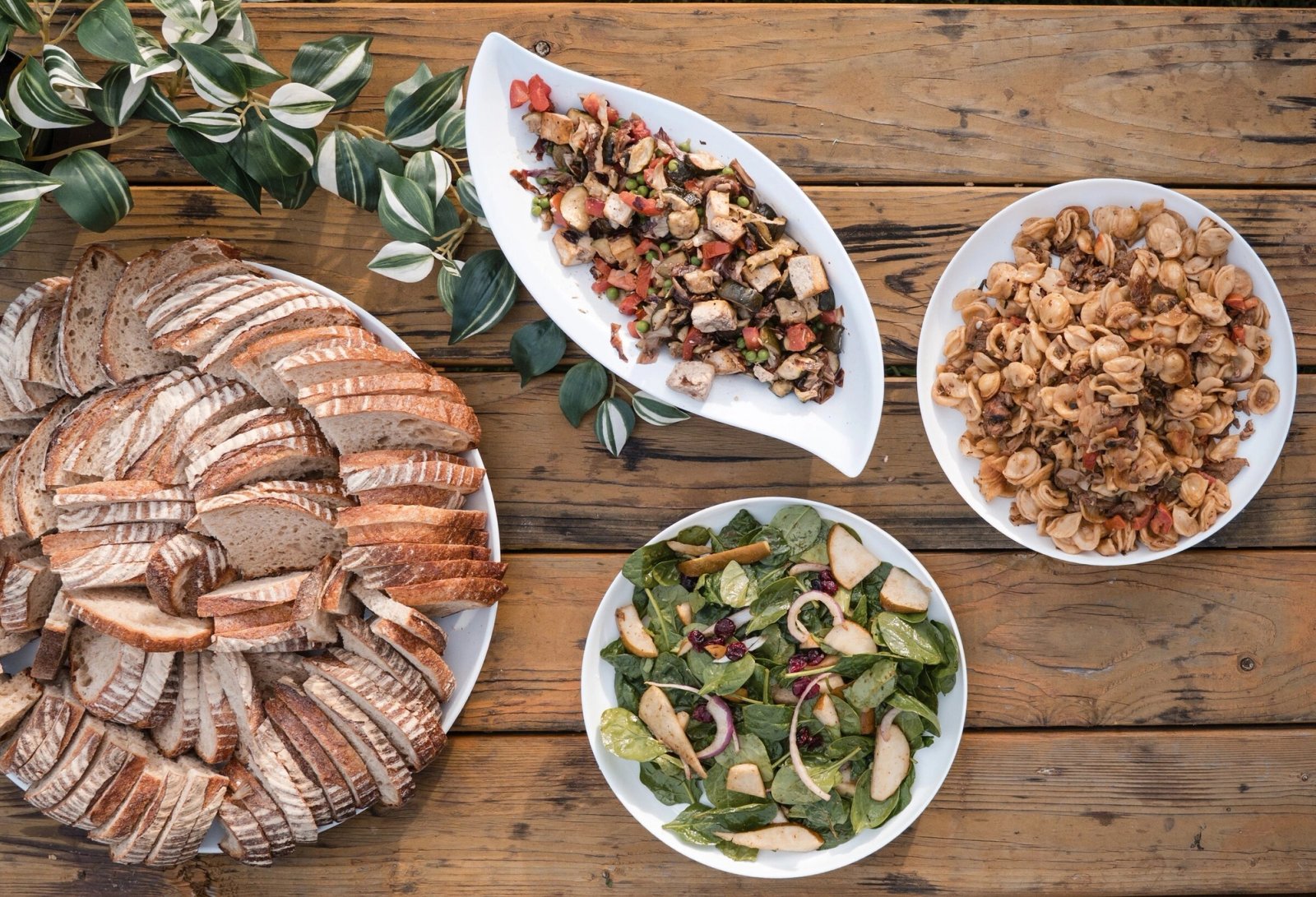
Family-style service (shared platters delivered to each table) often hits the sweet spot for Bay Area weddings: more elevated than a buffet, less formal than plated, and naturally conversational. If you’ve been to a wedding where everyone stayed seated longer than expected because the table was having a great time passing food around, you’ve seen this style working.
Handheld’s published ranges put family-style dinners around $150–$250 per person — again, directional, but helpful as a baseline when you’re comparing proposals.
Two practical family-style tips
- Choose your tables with food in mind. Shared platters need surface area. If you’re renting long “feast” tables, ask whether the platter plan assumes extra width (and whether that affects linen sizing).
- Plan for serving choreography. Great family-style service feels “continuous” rather than chaotic — platters arrive in waves, servers clear in waves, and courses are paced so guests don’t run out of clean plates or space.
Stations and buffet: flexible, efficient, and often the easiest for dietary needs
Stations and buffets get an unfair reputation as “less wedding-y,” but in the Bay Area they’re often the smartest option — especially for mixed dietary needs (vegan, gluten-free, halal, dairy-free) and venues with limited back-of-house space.
A well-run station plan feels intentional: an opening “wow” station (carving or chef-attended), one comfort station (pasta, tacos, or bowls), and one lighter station (salads, seasonal vegetables, or seafood).
Handheld’s directional range for buffets and stations is about $100–$200 per person, which lines up with why so many couples use this style to protect the overall budget while still investing in quality ingredients.
Avoid the two most common buffet problems
- Long lines: Ask how many stations are needed for your guest count, and whether they recommend duplicating the most popular station on both sides of the room.
- Food temperature: Confirm whether the venue has power, warming capacity, and adequate staging space — or whether the caterer provides hot boxes and mobile kitchen solutions.
Food trucks: fun, casual, and more logistical than most couples expect
Food trucks can be incredible for the Bay Area — especially for late-night snacks, cocktail-style receptions, or venues with an outdoor parking lot that naturally fits a truck lineup. But for a full dinner service, the success (or failure) is mostly about throughput and venue rules.
What to ask your venue before you book a truck
- Is outside catering allowed (or is there an exclusive caterer list)?
- Where does the truck park, and is there enough turning radius?
- Do they require a fire permit or on-site fire marshal for cooking?
- Are generators allowed (noise), and is there a quiet-hours/curfew policy?
Bay Area food-truck catering options to consider
If you want recognizable names, start with these (availability and minimums vary — confirm directly):
- Curry Up Now (SF/San Mateo/San Jose/Palo Alto/Oakland): catering for 10–500, and notes that for Bay Area events they can bring the food truck to your venue (minimum 75 people).
- The Boneyard Truck (South San Francisco): BBQ catering and food-truck service for weddings and private events around the Bay Area (including Napa and Sonoma).
- Señor Sisig (Bay Area): known for Filipino-Mexican fusion and offers catering (check current offerings and minimums with their team).
A sample Bay Area dinner flow (that actually keeps the dance floor alive)
If you’re aiming for an energetic reception, this sequence works well with most venues:
- Cocktail hour with substantial passed bites or one early station.
- Grand entrance, first dance, and welcome toast — then dinner opens immediately.
- Toasts happen during salad/first course (so the kitchen isn’t holding entrees).
- Open dance floor as soon as main service wraps. Dessert can be passed, stationed, or brought out later.
The biggest win here is avoiding a 45-minute “dead zone” between dinner and dancing — something that happens often when dinner lines are long or the toast plan fights the kitchen timeline.
Bottom line
If you want the most polished pacing and presentation, go plated (and budget for staffing). If you want a warm, social feel, family-style is the crowd-pleaser. If you want flexibility and efficiency, stations/buffet can be the smartest “Bay Area practical” choice. And if you want something playful, treat food trucks as an experience — then design the logistics so 150 hungry people aren’t standing in one line.
Helpful sources used for pricing and minimums include Handheld Catering & Events’ published service-style ranges and staffing guidance, and Curry Up Now’s catering page for its event range and food-truck minimum headcount.
Sources (confirm current details directly with vendors):
- https://handheldcatering.com/wedding-catering/
- https://www.curryupnow.com/catering
Browse Vendors