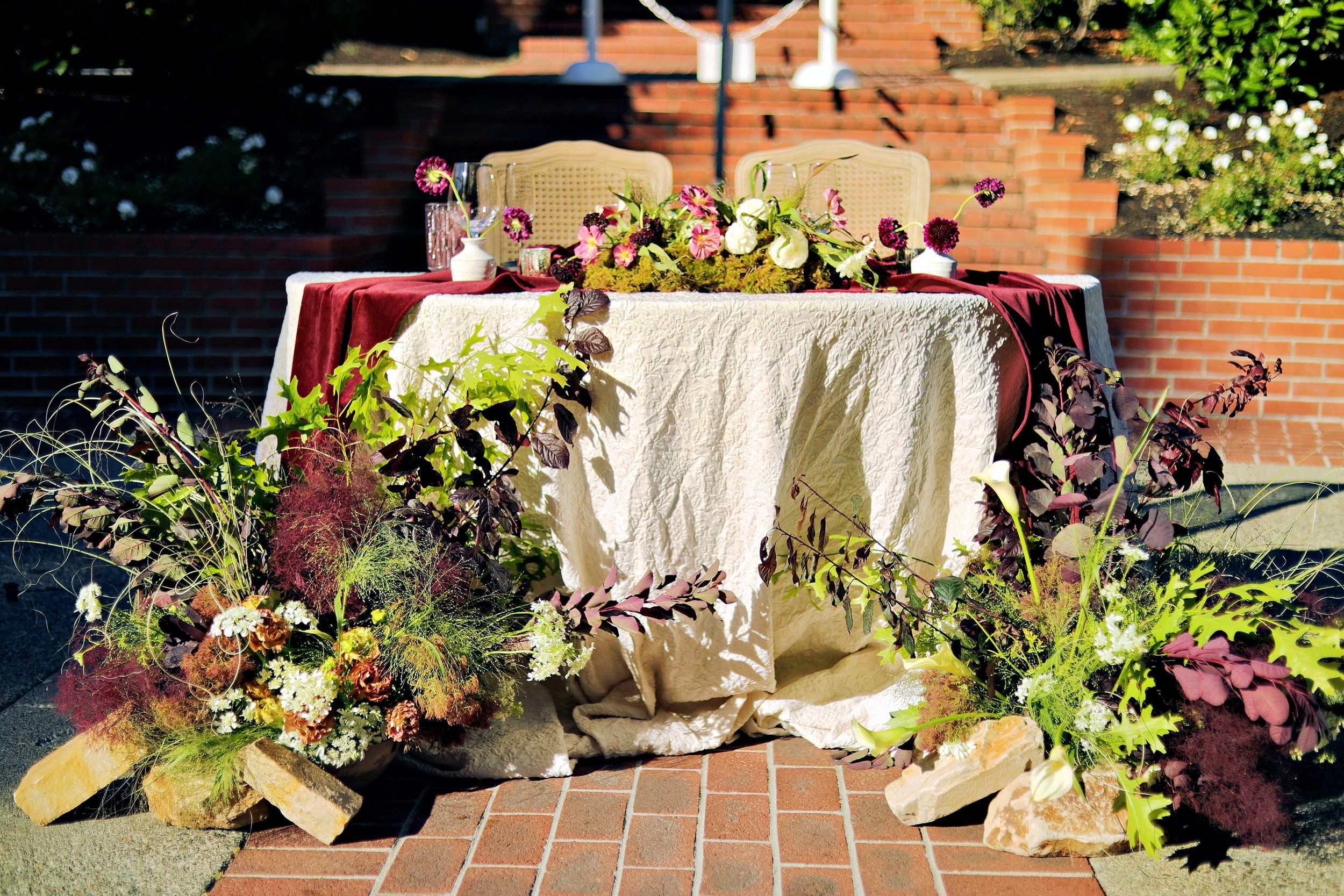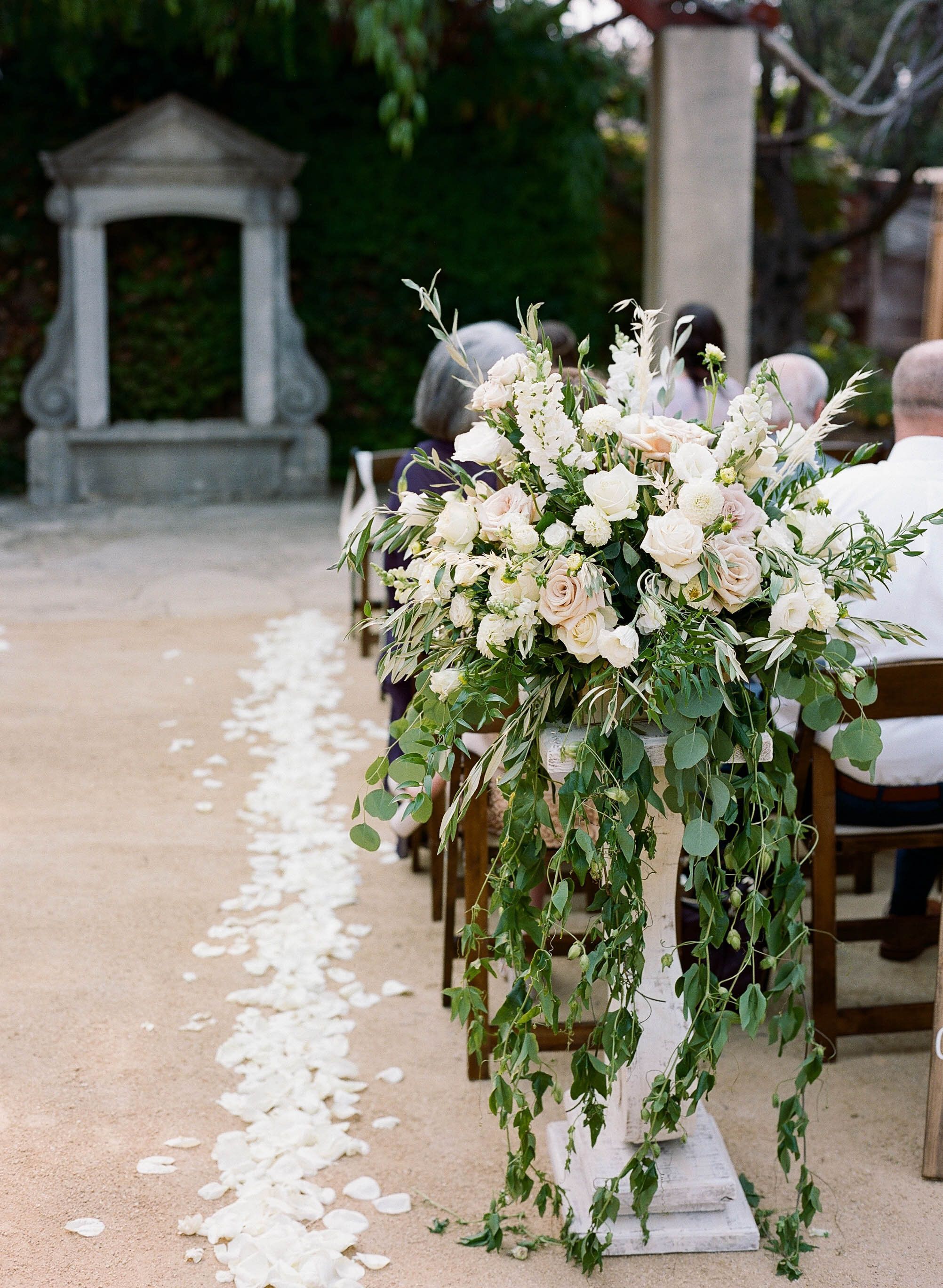
Florals are one of the few wedding vendors that touch almost every part of the day: what your ceremony looks like, what your tables feel like, what’s in your photos, and what your setup team is doing while you’re getting ready.
In the Bay Area, choosing a florist can be confusing because “florist” can mean anything from an a la carte studio that drops off personals to a full production team that builds an arch, installs it, and comes back at 11pm to strike it. The right choice isn’t “the most expensive” or “the most Instagram-famous.” It’s the team whose service model matches your venue, your timeline, and your tolerance for logistics.
Below are the questions that actually matter when you’re choosing a wedding florist in the Bay Area — and what the answers usually mean for your budget and stress level.
Start with one decision: a la carte vs full-service
Before you compare anyone’s style, decide which service model you need.
A la carte (pickup or drop-off)
A la carte florals are typically personals (bouquets, boutonnieres) plus simple pieces like bud vases or small centerpieces. You pick up, or they drop off within a window. There’s usually no onsite setup, no moving pieces from ceremony to reception, and no end-of-night breakdown.
This is a good fit when:
- Your venue is already visually strong (historic building, vineyard, modern gallery space).
- You’re not doing large installs (arches, hanging florals, stairs, escort wall).
- You have a planner/coordinator (or reliable friends) who can place items.
Full-service (design + installation + strike)
Full-service florists create the design plan, source product, build installations, deliver, set up, and often return to break down and strike rented items.
This is a good fit when:
- Your venue requires insurance, load-in rules, and professional install.
- You want a ceremony installation that needs mechanics (arch, chuppah florals, grounded meadow).
- You’re counting on repurposing florals across the day.
Bay Area reality check: many full-service studios have minimums (often a few thousand dollars and up) because installation work requires staff, vehicles, and time.
The questions that matter (and what you’re really learning)
1) “What’s your minimum, and what does it include?”
This is not an awkward question — it’s a time-saver.
Ask specifically:
- Is the minimum for full-service only, or also for a la carte?
- Does the minimum include delivery, setup, and strike?
- Are taxes/service fees included or added later?
If the florist’s minimum is close to your floral budget, you may have limited flexibility once delivery and labor are accounted for.
2) “Who is on my wedding day team — and is setup/strike included?”
The proposal might be gorgeous, but execution is what you’re paying for.
Ask:
- Will the lead designer be onsite, or a team lead?
- How many staff members are included for install?
- Is strike (end-of-night breakdown) included? If not, who is responsible for teardown and where do rentals go?
For venues with strict load-out windows (common in San Francisco and Peninsula venues), strike coverage can be the difference between a smooth night and a scramble.
3) “How do you handle substitutions (and what’s considered ‘equivalent’)?”
In the Bay Area, many designers source from the SF Flower Mart plus growers up and down the coast. Availability shifts fast with seasonality, weather, and demand.
Ask:
- If a specific flower is unavailable, do you substitute within the same color palette, or do you prioritize the same flower type?
- Will you confirm substitutions with me, or is it at designer discretion?
- Are there any “must-have” flowers you can’t compromise on?
A good florist will explain their substitution philosophy clearly — and won’t promise peonies in February without a plan.
4) “What will actually be reused — and what won’t?”
Repurposing is one of the best ways to stretch a budget, but it’s only real if someone is moving items.
Ask:
- Which pieces are designed to be moved (aisle arrangements, ceremony clusters, welcome pieces)?
- Who moves them (florist team, planner team, venue staff)?
- When do they get moved (during cocktail hour, after ceremony)?
If the florist is a drop-off service, repurposing usually becomes your coordinator’s responsibility.
5) “What are the labor-heavy items in my design?”
If you’re trying to control cost, you need to know what’s expensive because of flowers — and what’s expensive because of labor.
Common labor drivers:
- Hanging installs and chandeliers
- Full coverage arches (versus asymmetrical accents)
- Long garlands (priced per foot, and they add up fast)
- Anything requiring ladders, rigging, or multiple build hours
A florist who can explain labor vs product costs is usually a florist who can help you edit intelligently.
6) “What rentals are you providing — and what are the replacement fees?”
Many florists provide vases, compotes, candles, arches, and structures as rentals.
Ask:
- What’s rented vs purchased?
- What’s the replacement cost if something breaks?
- When do rentals need to be returned (and by whom)?
If your venue requires everything cleared same-night, confirm whether the florist’s strike includes rentals pickup.
7) “What do you need from my venue (and my planner) to be successful?”
This is the question that reveals professionalism.
Ask:
- Can you work from the venue’s load-in map and rules?
- Do you need reserved parking or a loading dock?
- Do you need a prep room onsite?
- Are there union labor requirements or elevator reservations (common in some SF buildings)?
A florist who asks these questions early is protecting your timeline.
8) “What does your proposal process look like — and what changes later?”
Some studios quote per item. Others quote a total design investment and build from there.
Ask:
- Is my proposal a fixed recipe, or a mood-board direction with flexible ingredients?
- When is the final headcount and layout due?
- When is the final payment due?
You’re looking for a process that matches how you make decisions. If you want control and specifics, choose someone who quotes with itemized clarity.
A few real Bay Area options (different service levels)
Every florist’s offerings and minimums change — confirm current terms directly with their events team.
- Lost and Found Floral Co (Bay Area): listed with a $3,000 full-service minimum and notes that full-service includes delivery, setup, and end-of-night breakdown.
- Tumbleweed Floral Design (Napa Valley): publishes guidance that luxury Napa florals for 2026–2027 commonly fall in the $20,000–$45,000 range.
- Flower Moxie (DIY option, ships): offers wedding-focused DIY packages and published minimums for wholesale-style ordering.
- Vibrant Hues Events (listed on Zola): notes a lower full-service minimum and an a la carte pickup minimum (availability varies by date).
If you’re choosing between two florists with similar aesthetics, pick the one whose service model fits your venue logistics. Style matters — but service is what you feel on the wedding day.
A practical Bay Area budgeting gut-check
Budgets vary widely, but here’s a realistic way to think about it:
- If you want personals + simple centerpieces with no installs, a la carte or hybrid approaches can work well.
- If you want an arch/chuppah install, aisle moments, and full reception styling, you’re paying for staff and time as much as for stems.
When you talk to florists, bring three pieces of information:
- Venue + city (SF logistics are different than Sonoma)
- Guest count and table count
- Two “non-negotiables” (example: ceremony install and lush head table)
That’s enough for a florist to tell you quickly whether you’re aligned.
The fastest way to know if a florist is the right fit
After one call, you should be able to answer:
- Do I understand what I’m paying for?
- Do I trust how they make substitutions?
- Do they sound organized about load-in, setup, and strike?
- Do they respect my budget without being dismissive?
If the answer is yes, you’ve found someone worth booking.
Browse Vendors