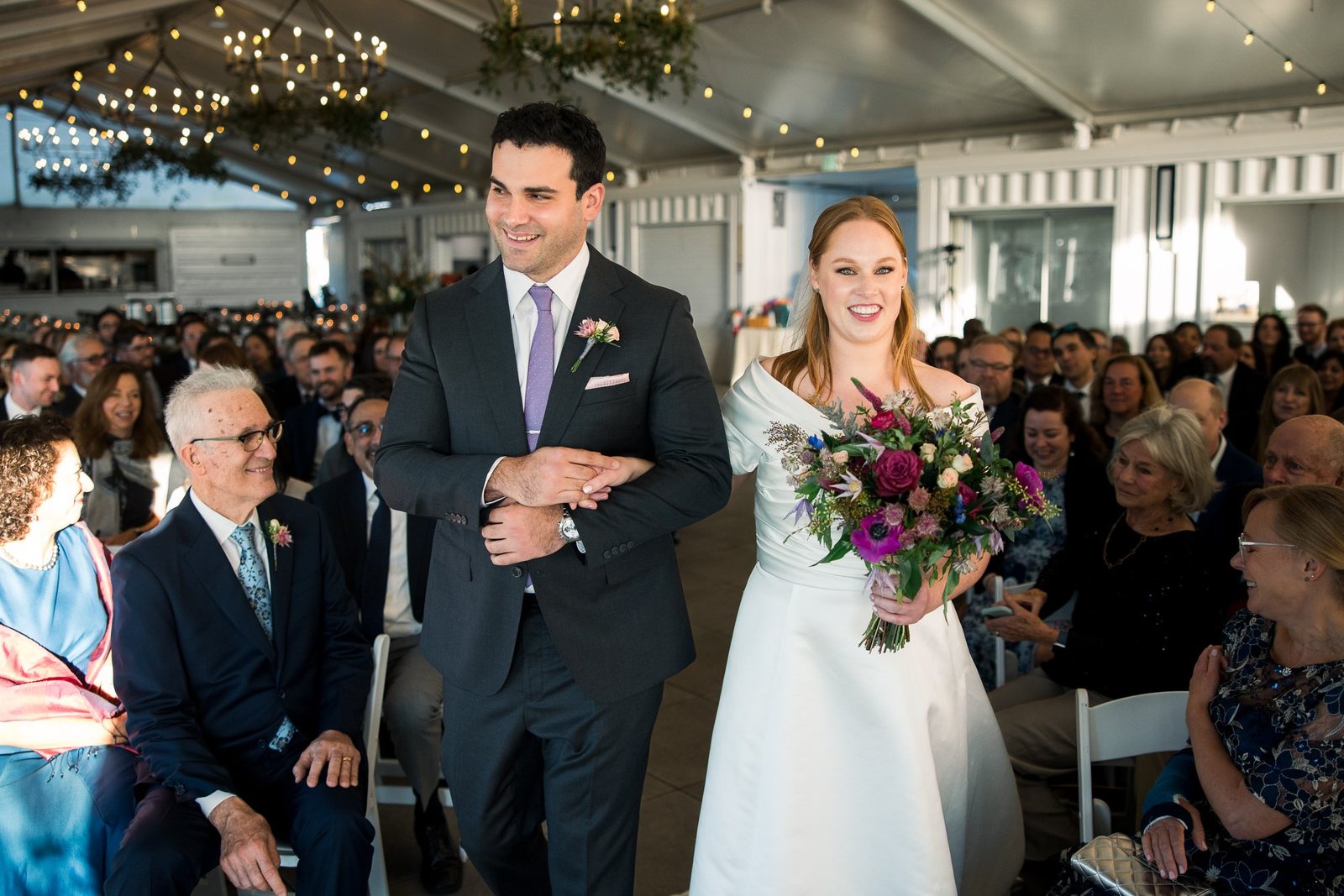
A great timeline is the quiet hero of a Bay Area wedding day. It keeps vendors in sync, protects your photo time, and helps guests feel like the day is moving with intention (not chaos).
Below is a realistic, hour-by-hour template you can copy, plus Bay Area-specific adjustments for traffic, microclimates, and the way golden hour works here.
Start with the 4 anchors (then build around them)
Before you assign minutes to every moment, lock in four fixed points. Everything else should flex around them.
- Your ceremony start time (the time on the invitation).
- Dinner service time (or when the first course must hit the tables).
- Golden hour portrait window (typically the last 60–90 minutes before sunset).
- Your venue’s hard end time and any noise curfew.
A realistic 10-hour Bay Area wedding timeline (ceremony at 4:30 PM)
This template assumes one main venue (ceremony + reception at the same property or a 10–15 minute drive), a guest count of roughly 80–180, and photography coverage that starts with getting ready.
11:30 AM — Getting ready begins (hair/makeup and details)
Plan for hair and makeup to start earlier than you think, especially if you’re getting ready in San Francisco, Oakland, or San Jose where parking/elevators can slow things down.
- Buffer: add 15 minutes for hotel loading docks, valet, or a slow elevator.
- Set aside 10 minutes for ‘details’ photos (invites, rings, shoes, florals) so your photographer isn’t racing later.
1:30 PM — Photographer arrives + finishing touches
This is when you’ll want the room tidy-ish, bouquets/boutonnieres present, and everyone who needs to be photographed in the space.
- If you’re doing gifts/letters, schedule them now (it’s calmer and you’ll look fresh).
- Have a labeled ‘photo box’ ready: invitation suite, rings, vow books, perfume, heirlooms.
2:30 PM — Optional: First look + couple portraits
A first look buys you time. In the Bay Area, it also reduces the pressure to do all portraits in the late-afternoon wind or fog.
- Allocate 30–45 minutes for first look + portraits (longer if you’re also capturing video).
- If you want a city photo stop (SF skyline, Palace of Fine Arts, etc.), add driving and parking time — it’s rarely ‘on the way.’
3:30 PM — Wedding party + immediate family photos
If you can do some family photos before the ceremony, cocktail hour becomes more enjoyable for you. Keep the list tight and designate a ‘family wrangler’ who actually knows everyone.
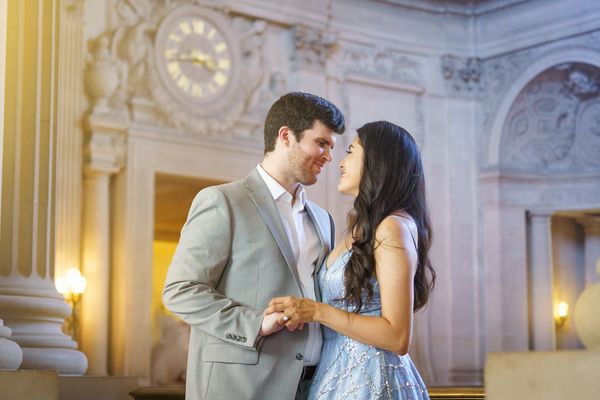
If you’re getting married at SF City Hall, photographers often plan formal groupings immediately after the ceremony, and a rough baseline is about 3 minutes per grouping (more for large groups).
For City Hall photo coverage, many photographers recommend budgeting about two hours depending on your goals and whether you’re photographing inside only or adding portraits around the city.
4:00 PM — Guests arrive + pre-ceremony buffer
In most Bay Area venues, guests need a real arrival window — parking shuttles, long driveways, and venue walking distances are common.
- Start prelude music 20–30 minutes before the ceremony.
- If your ceremony is outdoors, consider having water and shade options available — even ‘mild’ Bay Area days can feel hot in full sun.
4:30 PM — Ceremony
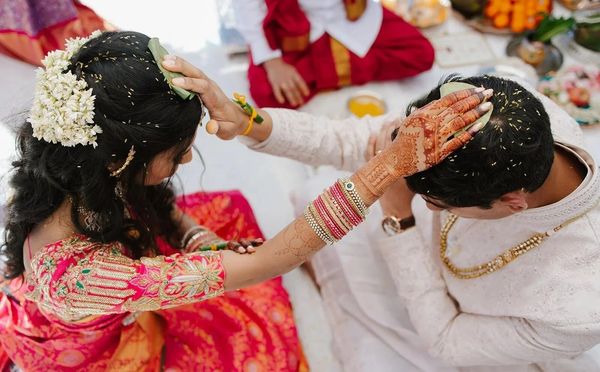
Most secular ceremonies land around 15–30 minutes, but you should confirm your own program. If you have cultural or religious components, build the timeline around their true duration (not a guess).
- Pro move: schedule ceremony start 10 minutes earlier than you ‘want’ to start, so you can still begin on time.
5:00 PM — Cocktail hour + family formals (if not done earlier)
A 60–90 minute cocktail hour is common because it gives you space for family photos, a few ‘just married’ portraits, and travel if your reception is in a different space.
- If the venue needs to ‘flip’ the ceremony space into reception, plan for the longer end (75–90 minutes) or a separate cocktail area.
- Try to protect 10–15 minutes for you to actually eat and drink during cocktail hour.
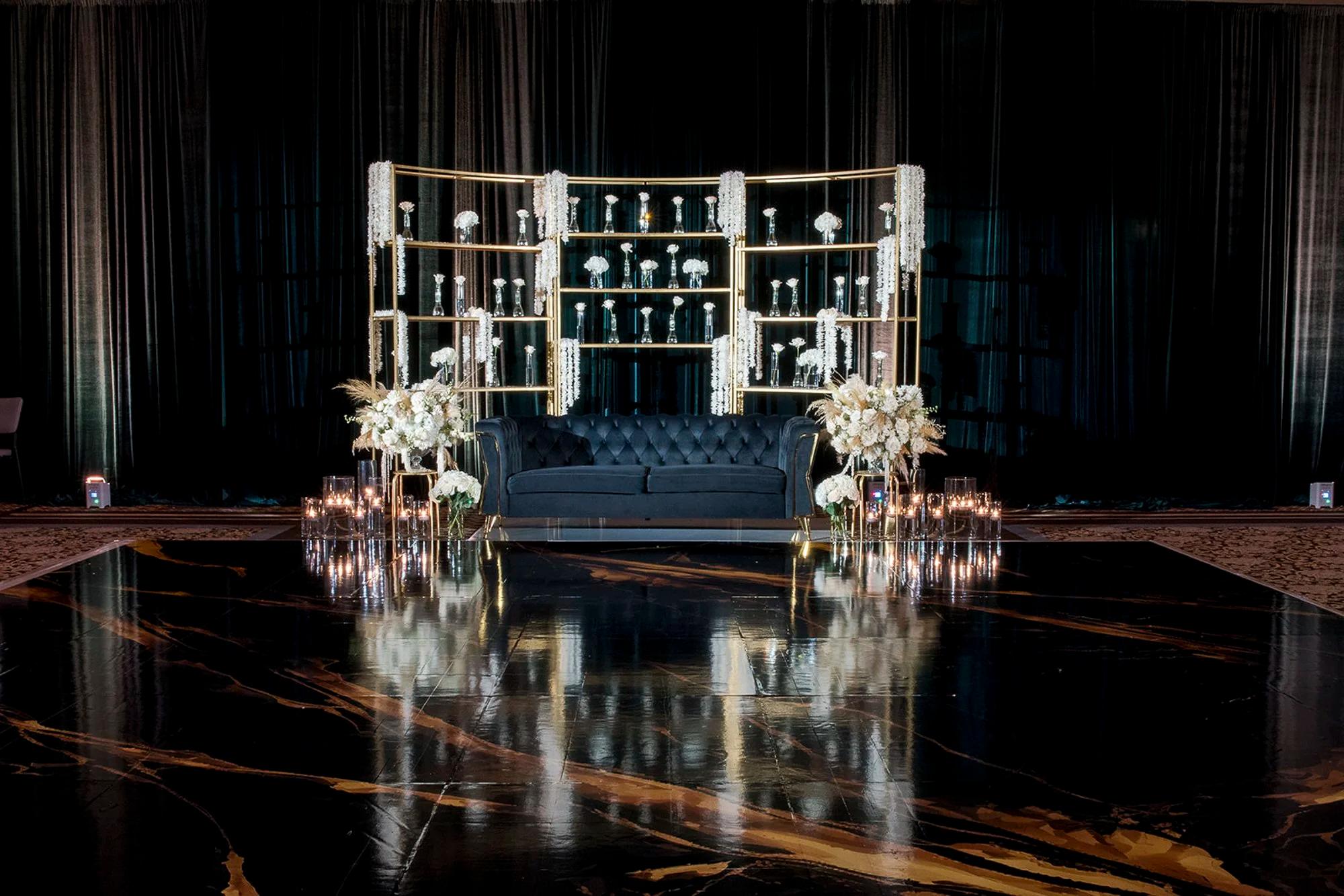
6:15 PM — Guests invited to dinner seating
Build in a clear transition from cocktail hour to dinner — announcements, a bell, or staff guiding guests. Otherwise you’ll lose 10–20 minutes to ‘where do we go?’
- If you have assigned seating, place escort cards where guests naturally pass, not hidden in a corner.
6:30 PM — Grand entrance + first dances (or welcome toast)
Keep the start of dinner clean and simple. Many couples either do an entrance + first dance up front, or do a short welcome toast and go straight into the first course.
- If you’re doing parent dances, consider placing them here too so the dance floor opens earlier.
6:45 PM — Dinner service
Dinner timing depends on service style. Plan about 60–90 minutes for plated service; buffets can be longer if lines are slow. Confirm what your caterer expects for your guest count.
- If you’re doing speeches during dinner, group them together so the room doesn’t stop-and-start repeatedly.
7:45 PM — Golden hour portraits (10–20 minutes)
Golden hour in San Francisco often begins about an hour before sunset (and can be fog-dependent). Time.now publishes daily golden hour windows you can use as a planning reference.
- Tell your coordinator and DJ this is a ‘hard hold’ so you’re not pulled into another table photo right as the light turns.
- If your venue is coastal (Half Moon Bay, Marin), plan a wind-proof option: wrap, veil clip, or indoor backup.
8:15 PM — Open dancing
Once the dance floor opens, try not to schedule too many interruptions. If you want a bouquet toss or cultural dance set, do it early while the energy is building.
- If you have an after-party elsewhere (SF bars, downtown San Jose), announce it early and include rideshare tips.
9:45 PM — Last call + late-night snack
If you’re serving a late-night bite, time it around the moment guests naturally need a reset. It keeps the dance floor fuller for the last hour.
- In the Bay Area, confirm whether your venue requires bar service to stop before the official end time.
10:30 PM — Grand exit (optional) + vendor load-out
If you want an exit photo, consider doing a ‘fake exit’ 30 minutes before the end so guests who leave early don’t miss it and vendors can still strike on time.
- Confirm if sparklers are allowed (many venues and cities restrict open flame).
Bay Area-specific timeline adjustments that save the day
1) Add real travel time (and parking time)
In the Bay Area, the drive time is rarely the whole story. Add buffer for parking garages, shuttle loading, and the walk to the ceremony site.
- Within SF: add 15–25 minutes for parking + elevator time.
- Crossing bridges: add 20–40 minutes in peak windows (and confirm if there’s a special-event schedule).
- Wine country: if guests are staying in different towns, plan shuttles and a hard ‘last pickup’ time.
2) Plan around microclimates
A 72°F forecast in Walnut Creek can mean 58°F and windy in Sausalito. If your day includes multiple locations, pack layers and have a Plan B for outdoor portraits.
- Fog/wind: keep hair/makeup touch-up kit with you, not in a car trunk.
- Hot inland venues: schedule portraits earlier and use golden hour for short, flattering light.
3) Make family photos fast (and actually pleasant)
Family photos expand to fill the time you give them. The fix is a short list, a point person, and a firm plan.
- Aim for 8–12 groupings max for most weddings.
- Order the list from biggest to smallest so people can leave when they’re done.
- Allow extra time for any ‘all guests’ photo — it takes longer to organize.
Two quick variations: brunch wedding and City Hall
Brunch wedding (ceremony at 10:30 AM)
Brunch weddings are underrated in the Bay Area: cooler temps, easier parking, and you can still host a sunset after-party if you want.
- 7:00 AM — Hair/makeup begins
- 9:30 AM — First look + portraits
- 10:30 AM — Ceremony
- 11:00 AM — Cocktail ‘hour’ (often 45–60 minutes)
- 12:00 PM — Brunch reception + toasts
- 2:00 PM — Daytime dance floor or send-off
San Francisco City Hall (weekday ceremony)
City Hall timelines depend on your reservation type and how much you want to photograph inside vs around the city. Many couples plan the ceremony itself as short (often under 30 minutes) and then do group photos right after while everyone is still gathered.
Every City Hall program and access pattern can change — confirm current rules, guest limits, and timing with SF City Hall and your photographer.
A simple checklist to share with vendors
Once you’ve drafted your timeline, share a one-page version with the people who need to execute it: planner/coordinator, photographer, videographer, DJ/band, and catering lead.
- Ceremony start time and who cues processional music
- Exact locations for: getting ready, first look, ceremony, cocktail hour, reception
- Family photo list + the name/number of your family wrangler
- Golden hour ‘hard hold’ time
- End time + last call + exit plan
Sources
Zoe Larkin Photography: https://zoelarkin.com/formal-groupings-sf-city-hall-ceremony/
Kristin Smith Photography: https://kristinsmithphotography.com/2026/05/25/best-places-for-photos-at-san-francisco-city-hall/
Time.now: https://time.now/san-francisco/sun/
Browse Vendors