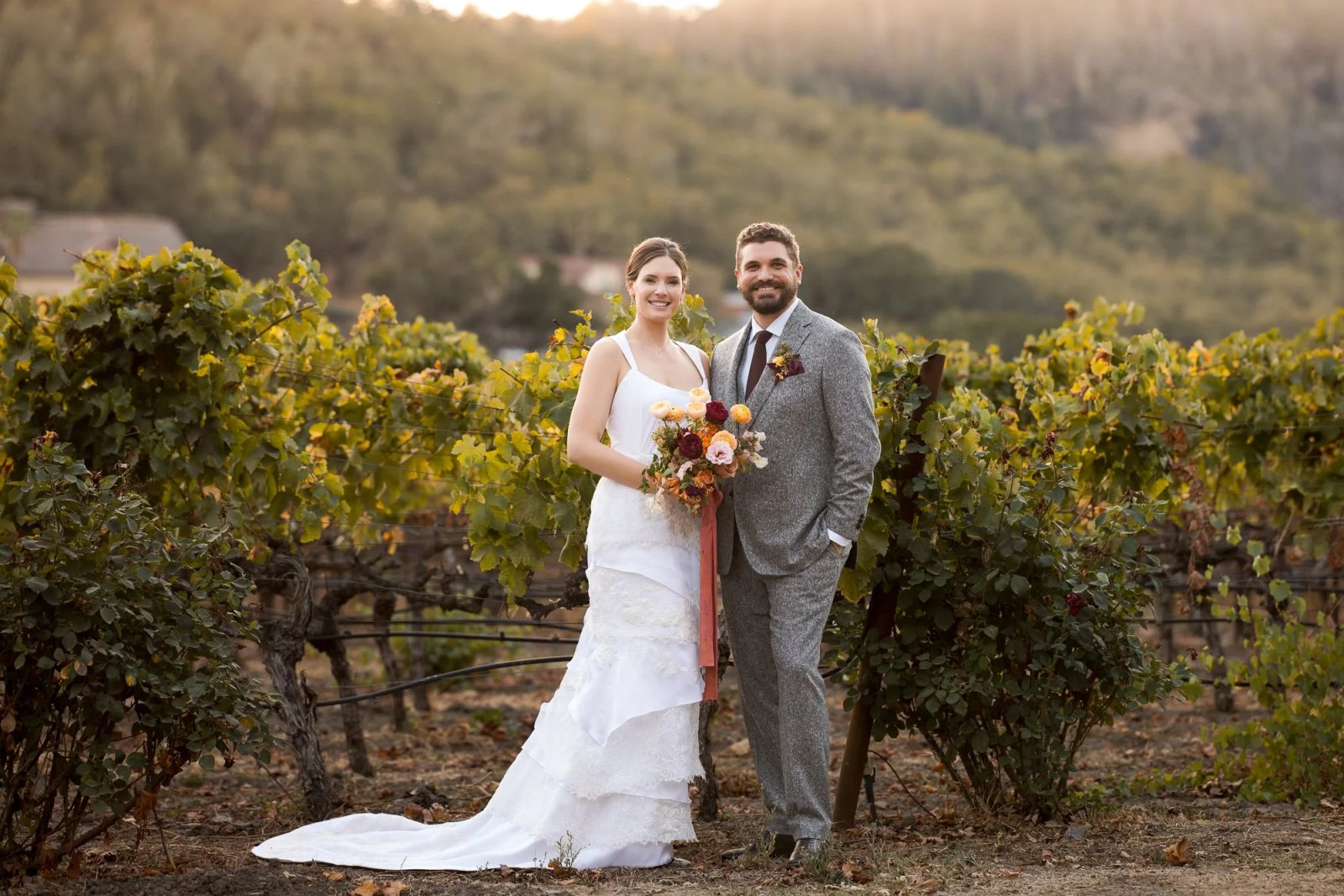
A wine country wedding looks effortless in photos — golden vineyards, long tables under string lights, sunset portraits that feel like a movie. The reality is that Napa and Sonoma wedding days run on logistics: drive times, narrow rural roads, limited rideshare late at night, vendor access windows, and sound rules that can shape your entire reception.
If you’re planning a Napa Valley or Sonoma County wedding in 2026, this guide gives you a realistic, Bay Area–specific timeline you can adapt — plus the questions to ask your venue and transportation company before you lock anything in.
Start with the two “hard constraints”: venue rules + transportation
Before you build a minute-by-minute schedule, get clarity on these two factors because they determine everything else.
1) Venue timing + sound restrictions
Many wine country venues have earlier amplified music cutoffs than couples expect. Some Napa venues have sound curfews that land around 9:30–10:00 p.m. for amplified music outdoors, even if the event itself can continue in a quieter format. (Always confirm your exact contract language and whether the cutoff is for outdoors only.)
In Sonoma, it’s also common for venues to have a 10 p.m. end time for outdoor celebrations, with options like moving indoors, hosting an after-party elsewhere, or switching to a silent disco if your venue allows it.
2) Transportation + drive times (and the “dark roads” factor)
In wine country, you’re often moving guests between:
- a hotel cluster (Napa, Yountville, Sonoma Plaza, Healdsburg, Santa Rosa)
- a ceremony site
- a reception site (sometimes the same, sometimes not)
Even when venues look close on a map, the real travel time can be longer (weekend traffic, single-lane roads, limited turnouts for buses). Build in buffer time and avoid overly tight transitions.
The ideal Napa/Sonoma wedding day timeline (10 p.m. music cutoff version)
This sample timeline assumes:
- ceremony + reception at the same venue (most common)
- a 10:00 p.m. amplified music cutoff (or a “quiet down” requirement)
- shuttles from a hotel area to the venue
Adjust everything earlier/later based on your season and the light.
11:00 a.m. – Vendor access + detail styling begins
If your venue allows early access, having your planner and photographer start with detail styling (invitations, rings, heirlooms, attire, florals) can save you time later.
Good to know: Some winery-adjacent properties limit access windows during harvest season, or restrict where vendors can stage cases, tables, and rentals. Ask about this early.
12:00–2:30 p.m. – Hair + makeup (with a buffer)
Plan roughly 45–75 minutes per person, plus setup time. If you want “getting ready” photos that feel calm, you need padding.
Buffer rule: Add 30 minutes you don’t intend to use. You’ll use it.

2:30–3:15 p.m. – Getting dressed + portraits in good light
Wine country venues tend to have big, beautiful outdoor areas — but the light changes fast. Aim to be dressed with enough time for partner portraits (if doing a first look), wedding party photos, and a few family groupings (or at least immediate family).
If you’re not doing a first look, you can still do individual portraits and wedding party photos before the ceremony.
3:15–3:45 p.m. – Guest arrivals + welcome drinks
If guests are arriving via shuttle, schedule the first shuttle drop about 45–60 minutes before the ceremony so arrivals don’t feel rushed.
Wine country-specific tip: Confirm whether your venue has a strict “no parking” or limited parking policy (many do). If so, your shuttle plan is not optional.
4:30–5:00 p.m. – Ceremony
A late-afternoon ceremony helps you avoid harsh midday sun in summer, build momentum before a 10 p.m. sound cutoff, and leave room for sunset portraits later.
Typical ceremony length is 20–30 minutes (longer for some cultural or religious ceremonies).
5:00–6:15 p.m. – Cocktail hour + golden-hour portraits
Keep cocktail hour at a true 60–75 minutes, and use 15–25 minutes near sunset for portraits.
If your venue has a strict “music off” time: this is also when you can plan a small “moment” (live acoustic set, a tasting station, passed dessert) that feels special without relying on late-night dancing.
6:15–6:30 p.m. – Guests seated + grand entrance
If you’re doing a formal entrance, keep it quick and move into dinner. The goal is to protect your dance time later.
6:30–8:00 p.m. – Dinner + toasts
A practical structure:
- 6:30 salad / first course
- 6:50 welcome toast
- 7:15 main course
- 7:35 parent toasts
- 7:50 final toast
Keep toasts to 2–4 people max unless your crowd truly loves a microphone.
8:00–9:30 p.m. – Dancing (peak energy window)
If you have an early sound cutoff, treat this as your “main event.” Start dancing earlier than you would in San Francisco.
A strong flow: 8:00 first dance (or straight into an open dance set), 8:10 open dancing, 8:45 dessert opens, 9:10 final dance set builds.
9:30–10:00 p.m. – Last call + final dance + transition
If amplified music must end at 10:00 p.m., don’t let the end sneak up on you. Plan for a clear last call moment, a final song with everyone on the floor, and either a quiet wind-down (sparklers are often restricted — check rules) or a transition to an after-party plan.
After-party options that actually work in wine country
If you want to keep celebrating, build a plan that doesn’t rely on random rideshares at 11:30 p.m.
Option A: Hotel bar takeover
This is the easiest option if you have room blocks at a full-service hotel. Confirm bar hours and whether you can reserve space. Plan shuttles to drop guests at the hotel, not “somewhere downtown.”
Option B: Private room in town (Napa / Sonoma / Healdsburg)
A reserved private room works well for 20–60 people and feels intentional. Confirm noise rules and closing time. Build the shuttle schedule around the after-party end.
Option C: Silent disco (venue-permitting)
A silent disco can keep the party going while staying within sound limits — but you must confirm that your venue allows it and that it fits the contract.
Transportation timing: the shuttle schedule that prevents chaos
Shuttle plans fail when the last shuttle is too early or there’s no communication.
A reliable structure:
- First guest pickup: 75–90 minutes before ceremony
- Second pickup: 45–60 minutes before ceremony
- Final pre-ceremony pickup: 20–30 minutes before ceremony
- Return shuttles: start 30–45 minutes before the reception ends
- Final shuttle: 15–30 minutes after your contracted end time (so guests aren’t sprinting)
Also plan one earlier shuttle for older relatives, families with kids, and anyone who wants to head back after dinner.
The questions to ask your venue (before you sign)
These answers will change your timeline more than your color palette.
- What time must amplified music end — and does that differ for indoors vs outdoors?
- Is there a hard “event end” time, or can guests stay while music stops?
- What is the vendor load-in and load-out schedule? Is there a strict strike time?
- Are there harvest-season restrictions, blackout dates, or access limitations?
- Is shuttle transportation required? If yes, what are the minimums?
- Where do shuttles stage, and how many can line up at once?
- Is there a ceremony start-time requirement (some venues prefer a fixed window)?
A planning shortcut: build your timeline backwards from the cutoff
If your venue has a 10 p.m. music cutoff, work backwards:
- 10:00 amplified music ends
- 9:40 final dance / last call
- 8:00 dancing begins
- 6:30 dinner begins
- 4:30 ceremony begins
Once those anchors are set, everything else gets easier.
Quick 2026 planning notes: Napa winery rules + why it matters
One more reality check: most Napa wineries can’t host weddings due to the Winery Definition Ordinance (WDO). Only a limited number were “grandfathered” to host weddings, which is why true winery weddings can be harder to find (and book) than people expect.
That doesn’t mean you can’t have a wine country wedding — it just means many couples choose resorts, estates, and purpose-built venues, and then use wineries for rehearsal dinners or related events.
Final checklist for a timeline that feels relaxed
- Build the schedule around your venue’s sound/end-time rules.
- Start earlier than you think so you can still have dancing.
- Pad every transition with buffer time.
- Lock transportation early and communicate it clearly to guests.
- Plan an after-party that doesn’t depend on late-night rideshare availability.
If you do those five things, your wine country wedding will feel as effortless as it looks.
Browse Vendors