If you’re planning a Bay Area wedding, the “first look” question tends to pop up right after you book a photographer: do you see each other privately before the ceremony, or save it for the aisle?
There isn’t a universally “right” choice. But in the Bay Area, logistics and light matter more than couples expect—traffic can eat up an hour, weather can change in 10 minutes, and many of our most popular ceremony spaces have strict time windows.
This guide breaks down what Bay Area couples are choosing in 2026, the real tradeoffs, and how each option changes your timeline (with example schedules you can adapt).
Quick definitions (so you’re comparing the same thing)
What a “first look” means
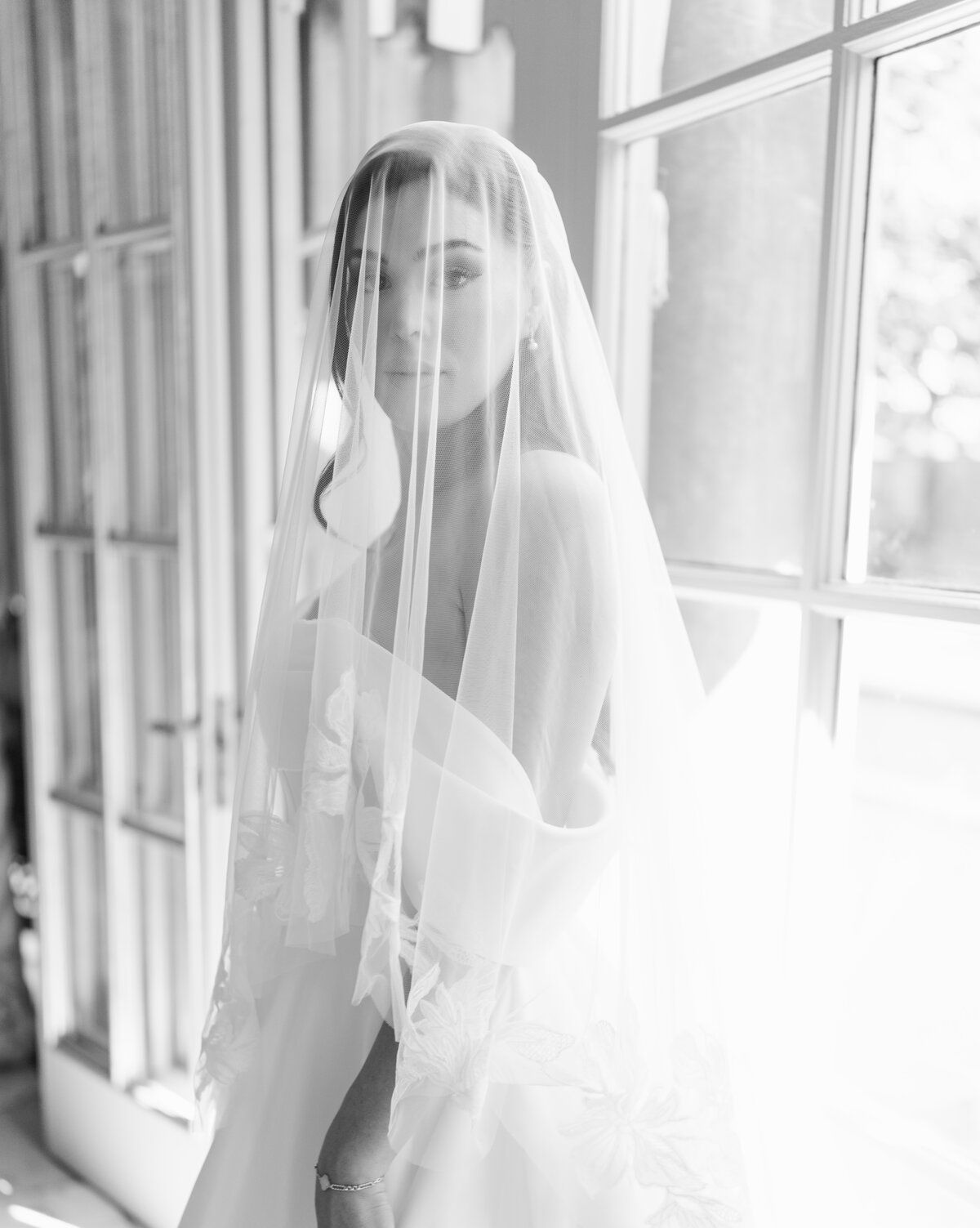
A first look is a planned moment where you see each other before the ceremony—usually in a quiet spot with your photographer and maybe your planner. It’s often followed immediately by couple portraits (and sometimes family/wedding party photos).
What a “traditional reveal” means
A traditional reveal means you don’t see each other until the ceremony—typically the moment one partner walks down the aisle.
In both cases, you can still do a “private last touch” (holding hands around a corner), a letter exchange, or a quick check-in without actually seeing each other.
Why this decision feels different in the Bay Area
Bay Area weddings are uniquely sensitive to:
- Microclimates. A sunny morning in Napa can turn into fog in San Francisco by late afternoon.
- Travel time. Crossing the Bay Bridge or getting from a hotel to Golden Gate Park can be unpredictable.
- Venue rules. Many venues have fixed ceremony start times, noise curfews, or limited access windows.
- Golden hour reality. If you want those soft, glowy portraits, your schedule needs to match the actual sunset—not your ideal Pinterest timeline.
If you’re deciding based on “vibes” alone, you might be surprised by how much the timeline pushes you one way or the other.
The best reasons to do a first look
1) You want to actually attend your cocktail hour
A first look often lets you finish couple portraits and many group photos before the ceremony. That means you can join cocktail hour instead of spending it in photo mode.
2) You’re doing photos at more than one location
In the Bay Area, it’s common to get ready at a hotel, do photos somewhere scenic (City Hall, Sutro Baths, Palace of Fine Arts, downtown San Jose landmarks), then head to the ceremony/reception.
A first look makes multi-location plans less stressful, because you’re not racing the clock after the ceremony.
3) You’re worried about harsh midday light
If your ceremony is at 2:00–3:00pm (common for some venue packages), portraits right after can mean strong sun or squinting.
A first look gives your photo team more control: shaded gardens, a courtyard, a quieter corner of the property—whatever looks best.
4) You want to calm nerves before guests arrive
Many couples say the first look is the only time the day feels “quiet.” If you’re both anxious, it can reset the whole day.
The best reasons to skip the first look (and do a traditional aisle reveal)
1) You want the aisle moment to be the first time—on purpose
If the ceremony reveal is a core part of your vision, that’s valid. For some couples, it’s not replaceable.
2) Your ceremony is the emotional center of the day
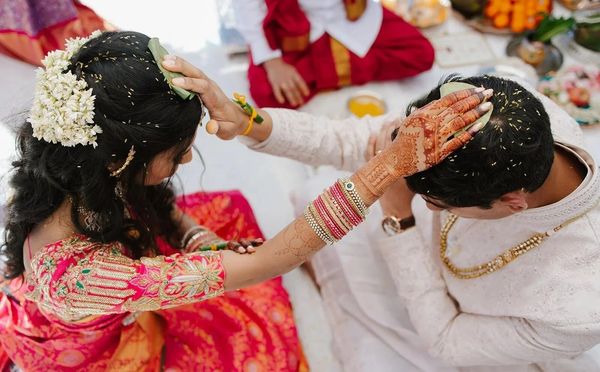
If you’re planning a meaningful ceremony (religious, multicultural, or with personal vows), a traditional reveal can heighten that shared experience with your guests.
3) You want a slower morning
A first look can pull the schedule earlier. You’ll need hair/makeup done sooner, plus buffer time for travel and staging. If you’re not a morning person, that matters.
4) You’re having a short coverage window
If you’re booking fewer photography hours, it can be hard to fit getting-ready photos, a first look, and pre-ceremony portraits without feeling rushed.
Bay Area-specific timeline considerations (the “stuff nobody tells you”)
Golden hour changes everything
Golden hour is roughly the hour before sunset, and in Northern California the timing swings a lot by season. A late-fall wedding can lose daylight early, while summer weddings can have light until 8pm.
Practical takeaway: if you want golden-hour portraits but also want to attend cocktail hour, a first look is often the cleanest solution.
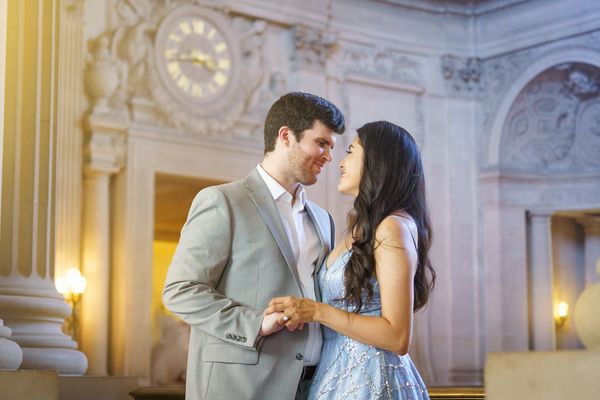
San Francisco City Hall is its own category
City Hall ceremonies require check-in and logistics that make a strict “don’t see each other” plan difficult. Many photographers recommend taking romantic portraits before the ceremony (when City Hall is quieter) or doing a planned first look at a nearby hotel.
If you love the idea of a traditional reveal, consider making the ceremony itself private (fewer guests) and treating a later reception entrance as your big “public moment.”
Popular photo landmarks are busiest when you don’t want them to be
Places like the Palace of Fine Arts can look very different depending on time of day, and crowds can change quickly. Morning often means better access and cleaner backgrounds. Late afternoon can be beautiful too, but you’ll likely need more patience.
Timeline examples you can copy
Below are two sample timelines for a typical Bay Area wedding with a single main venue. Adjust for travel if you’re doing separate photo locations.
Example 1: First look timeline (ceremony at 4:30pm)
- 12:00pm – Hair and makeup starts
- 2:00pm – Getting-ready photos + details
- 2:45pm – First look (quiet spot on-site or near hotel)
- 3:00pm – Couple portraits
- 3:30pm – Wedding party photos
- 3:50pm – Immediate family photos (if everyone is present)
- 4:15pm – Hide / refresh / touch-ups
- 4:30pm – Ceremony
- 5:00pm – Cocktail hour (you can actually attend)
- 5:45pm – If needed, 10–15 minutes of “just married” portraits
- 6:00pm – Grand entrance + dinner
Example 2: Traditional reveal timeline (ceremony at 4:30pm)
- 12:00pm – Hair and makeup starts
- 2:15pm – Getting-ready photos + details
- 3:45pm – Final touch-ups + one partner fully hidden
- 4:00pm – Guests arrive
- 4:30pm – Ceremony (first time seeing each other)
- 5:00pm – Family photos + wedding party photos
- 5:30pm – Couple portraits
- 6:15pm – Grand entrance (cocktail hour is mostly done)
- 6:30pm – Dinner
If you want a traditional reveal but hate missing cocktail hour, ask your photographer about a “hybrid” plan: do some family groupings before the ceremony (without the couple together), then keep post-ceremony photos shorter.
A practical decision checklist
Answer these honestly:
1. Do we care more about attending cocktail hour or the aisle reveal being the first moment? 2. Are we doing multiple locations (hotel + photo landmark + venue)? 3. What time is the ceremony, and what season is it? 4. Do we have older relatives who need earlier photos and then rest? 5. Do we tend to run late under stress? (Most couples do.)
If you answered “yes” to multi-location, older relatives, or stress/late-running, a first look usually saves you.
Tips to make either choice feel great
If you do a first look
- Choose a spot with privacy (a courtyard, side garden, or a quiet hallway).
- Build in a 10-minute buffer for nerves and wardrobe adjustments.
- Plan a second mini-session at golden hour for that dreamy light, even if it’s just 10 minutes.
If you do a traditional reveal
- Make sure your aisle setup is dialed (music timing, processional spacing, where you’ll stand).
- Keep post-ceremony photo lists tight—group shots can balloon fast.
- Consider a short “private moment” right after the ceremony before joining guests.
Bottom line
In 2026, many Bay Area couples choose a first look because it buys time—less rushing, better photo light control, and more time with guests.
But if the aisle reveal is the emotional moment you’ve pictured for years, you can absolutely keep it—just plan a tighter, more realistic post-ceremony photo window.
If you’re unsure, ask your photographer to map both timelines for your exact venue and date. The best choice is the one that lets you be present on your wedding day.
Browse Vendors