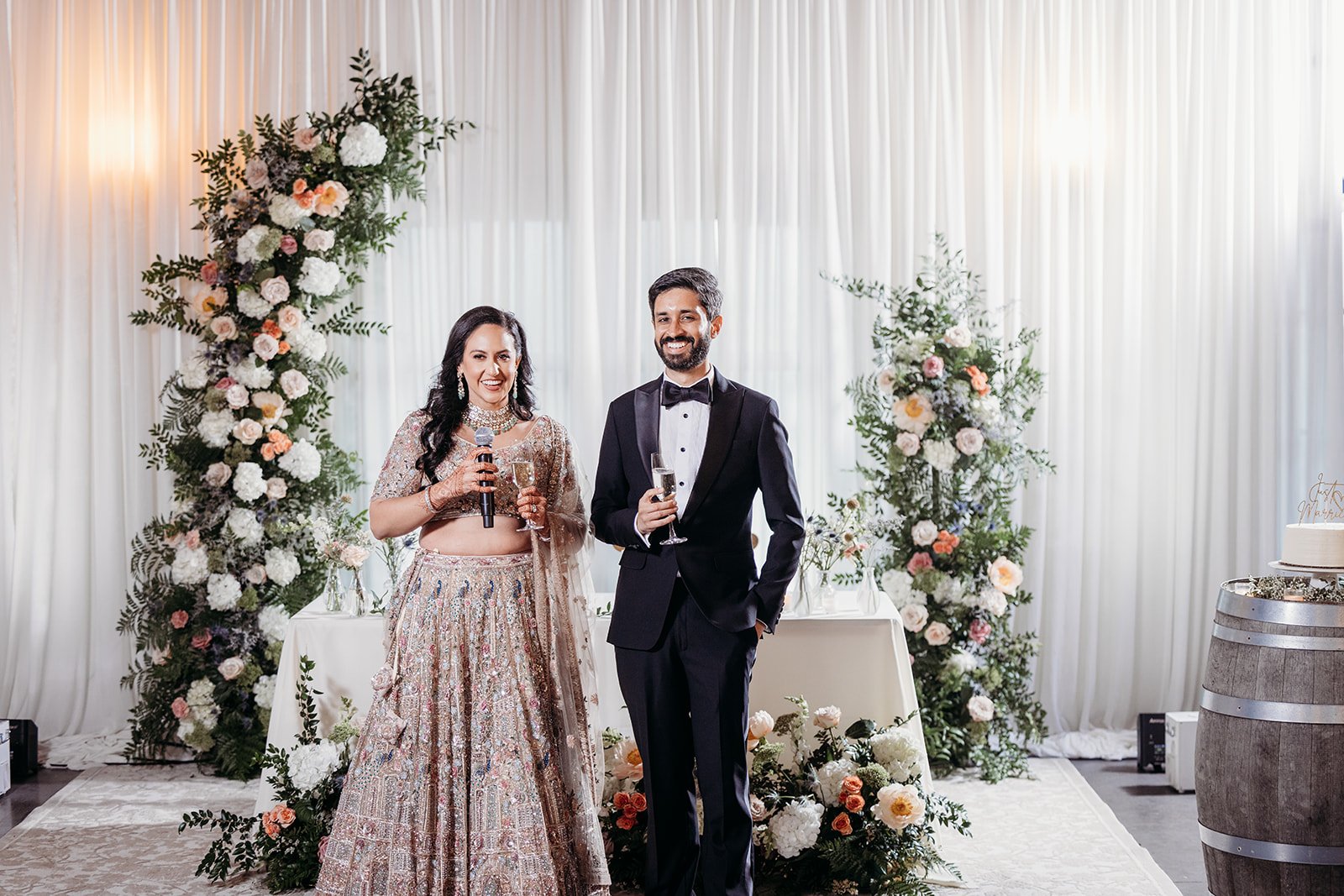
Wedding flowers are one of those line items that can swing wildly in the Bay Area — from a simple bouquet-and-boutonniere setup to full-on floral “architecture” that transforms a venue. If you’ve started collecting proposals and felt like you’re comparing apples to orchids, you’re not alone.
This guide breaks down what Bay Area couples typically pay for wedding florals, what actually drives the cost, and how to think about seasonal blooms in Northern California so your designs look intentional (and your budget feels sane).
What Bay Area wedding flowers typically cost in 2026
There isn’t a single “right” number, but it helps to understand the spectrum.
National averages vs. Bay Area reality
Nationally, The Knot’s 2025 Real Weddings Study reports an average wedding flower spend of $2,723. That includes everything from small weddings with DIY centerpieces to large, full-service floral installs.
In the Bay Area, full-service floral design is often a different category. One San Francisco Bay Area florist notes that full-service weddings designed by an experienced, professional florist typically start between $8,000–$10,000.
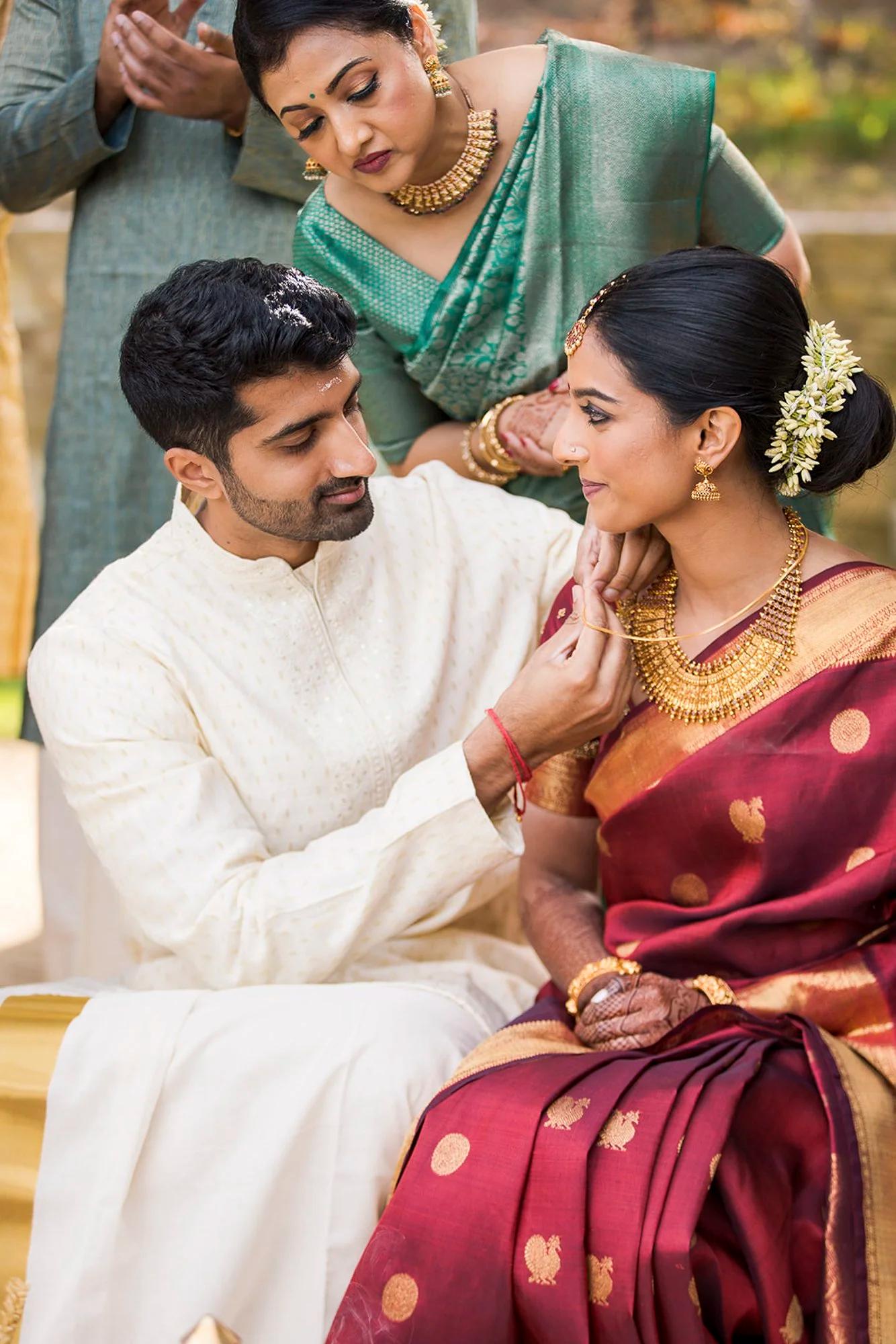
And if you’re planning in Wine Country at the luxury end, the ceiling can be much higher. A Napa Valley floral designer writing specifically for 2026–2027 weddings estimates that most full-service luxury wedding florals in Napa Valley range from $20,000–$45,000, with multi-day celebrations often landing $35,000–$60,000+.
What those numbers usually include (and what they don’t)
Floral quotes aren’t just “flowers.” You’re paying for:
- Design time (mood boards, revisions, sourcing)
- Product (fresh blooms + greens)
- Mechanics (vessels, foam-free structures, wiring, tape, rentals)
- Labor (processing, prep, installation crew, styling)
- Delivery, setup, and strike
A useful benchmark: that same Napa guide notes that a $20,000 floral investment for a 100–130 guest wedding might cover personal flowers, a ceremony installation, 15–18 reception centerpieces, cake florals, plus delivery/setup/strike.
Why Bay Area floral pricing varies so much
If two proposals have the same guest count but one is double the price, here are the usual reasons.
1) Installation vs. arrangements
A bouquet is an arrangement. A ceremony arch is an installation. Installations require additional structures, mechanics, and labor — and often more on-site time.
2) Guest count affects table count (and labor)
Florals scale with tables, not guests. A 120-person wedding could be 12 round tables or 20 long tables — and long tables often require multiple pieces (bud vases, compotes, garlands) rather than one centerpiece.
3) Venue logistics in the Bay Area
Load-ins in San Francisco, stairs, tight elevator schedules, long carries, limited parking, and strict venue rules can add labor. In Wine Country, longer travel and multi-day events add crew hours.
4) Flower choice and seasonality
Peonies in May? Great. Peonies in October? Possible, but you’re typically buying imported blooms and paying a premium.
5) Reuse (repurposing) can meaningfully reduce cost
Repurposing ceremony florals to reception spaces is one of the highest-impact ways to keep design lush without doubling spend. Think:
- Aisle meadows moved to the sweetheart table
- Ceremony urn arrangements moved to the bar or entry
- Grounded arch pieces split across escort display + lounge
Seasonal blooms in Northern California (and how to use them)
Northern California is a dream for flowers: mild weather, access to California farms, and year-round variety. But “seasonal” still matters — and leaning into it is the easiest way to get florals that look natural in photos.
Spring weddings (March–May): romantic, airy, garden-forward
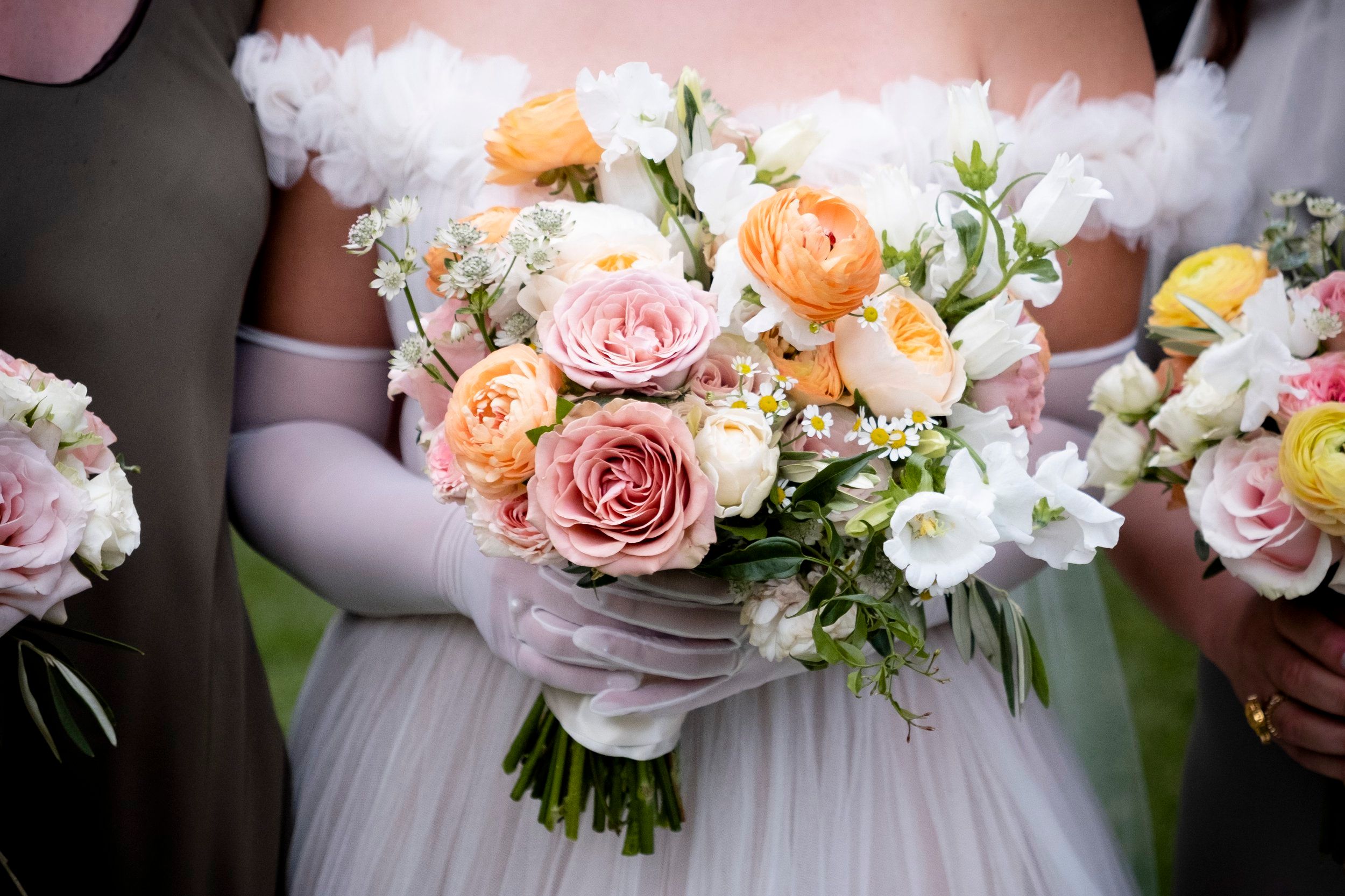
Spring is peak for soft color palettes and movement. Popular spring blooms for San Francisco weddings include tulips, peonies, ranunculus, anemones, lilac, and wisteria, plus statement branches like cherry blossoms and magnolia.
Design tip: If you want the “light and editorial” look, spring is the easiest season to achieve it with minimal filler.
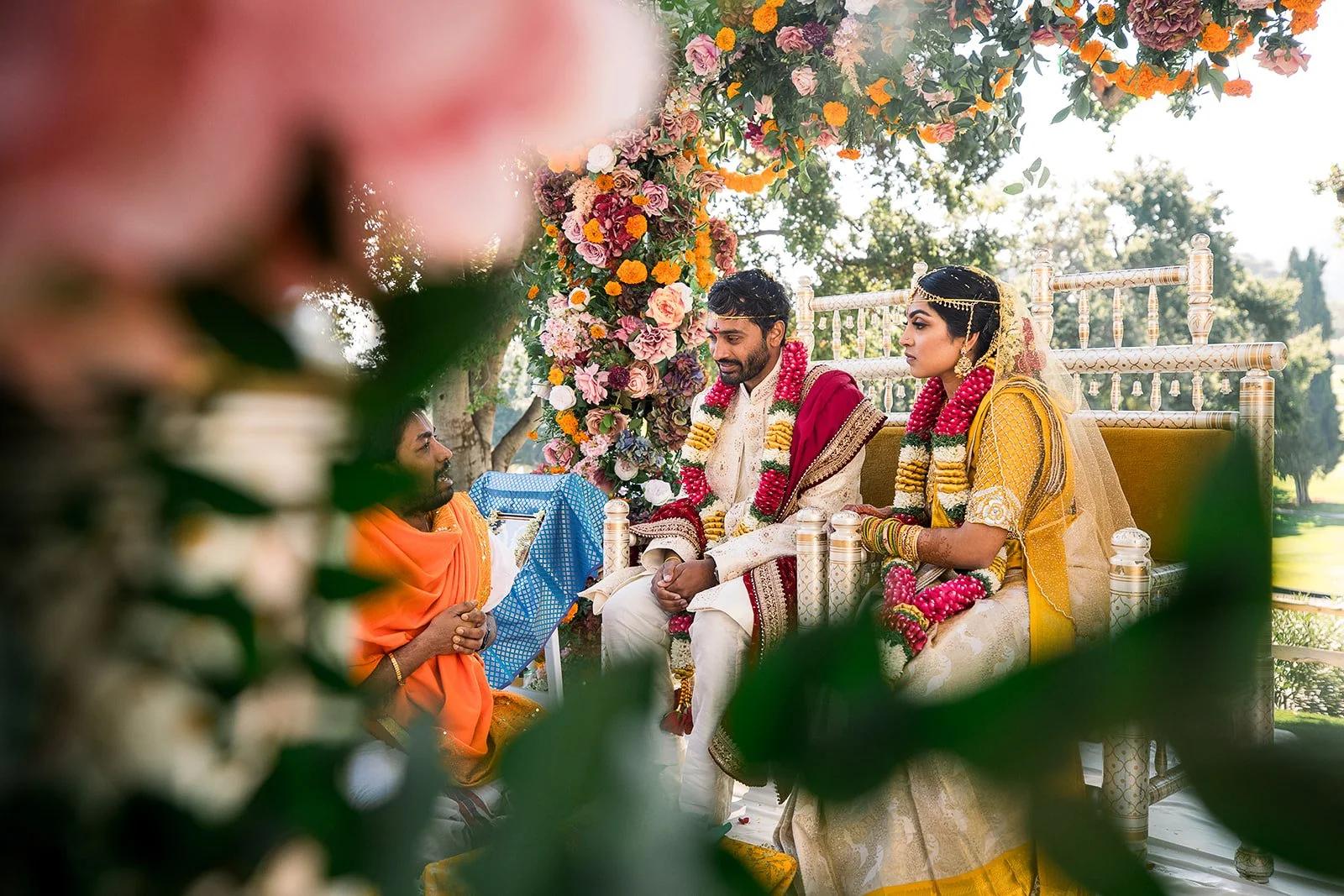
Summer weddings (June–August): bold color + texture (with heat in mind)
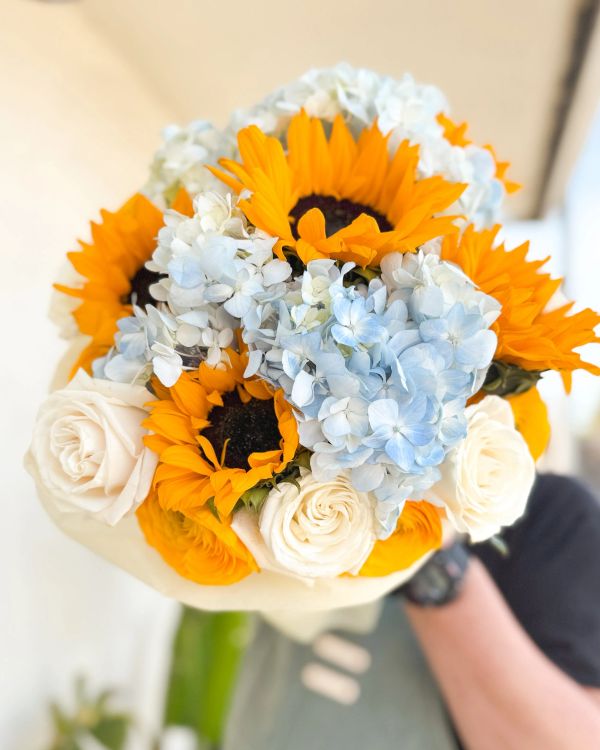
Summer gives you strong, saturated palettes and big statement blooms. Common summer picks include dahlias, hydrangeas, zinnias, sunflowers, plus hardy workhorses like carnations.
Design tip: If your ceremony is in direct sun (common in Napa/Sonoma), ask your florist which blooms hold up best for a 2–3 hour outdoor window.
Fall weddings: moody palettes, warm neutrals, and structured shapes
Fall florals in San Francisco often lean into deeper tones and texture. Typical fall choices include roses, chrysanthemums, calla lilies, cosmos, and marigolds.
Design tip: For that “modern fall” vibe, pair warm neutrals (sand, caramel, blush) with one saturated accent (rust, burgundy, or plum).
Winter weddings: high-contrast, sculptural, and surprisingly luxe
Winter flowers can be stunning — especially for City Hall and indoor venues where lighting is controlled. Winter options include amaryllis, hellebores, camellias, and pansies.
Design tip: Winter is ideal for minimalist designs (monofloral bouquets, fewer statement moments) that feel intentional rather than sparse.
Smart ways to set a floral budget that matches your priorities
If you’re trying to decide whether flowers are a “splurge” or a “supporting character,” use these framing questions.
Decide what needs to be photographed close-up
Florals matter most in personal flowers, your ceremony focal point, and reception tables (especially the head table). If you invest in those, the rest can be simplified without your wedding feeling under-designed.
Choose one “statement moment” (not five)
A common Bay Area pattern: couples want an arch, ceiling install, escort display wall, bar moment, and lounge vignette. Pick one hero element, then keep the others simple.
Consider a hybrid approach
If you love design but want to control cost, ask florists about a la carte personal flowers, smaller centerpieces plus lots of bud vases, and greenery-forward designs (eucalyptus, olive, vines).
Questions to ask Bay Area florists before you sign
Use these to compare proposals fairly:
- What is your minimum, and what does it typically include?
- How many staff members will be on-site for install and strike?
- Are candles/vessels included, rented, or purchased?
- How do you handle repurposing from ceremony to reception?
- Can we prioritize seasonal and California-grown blooms?
- What’s your backup plan for weather (wind, heat, rain)?
A final Bay Area-specific reminder: many florists book up early. One SF Bay Area florist notes that local florists often fill their calendars six months to a year (or more) out.
A realistic example: three common Bay Area floral “tiers”
Every wedding is different, but these ranges can help you sanity-check proposals.
Tier 1: Simple + intentional (often $2,500–$6,000)
Personal flowers, simple ceremony pieces (or none if the venue is strong), and bud vases or modest centerpieces.
Tier 2: Full-service classic Bay Area (often $8,000–$15,000+)
Personal flowers, a ceremony focal moment, reception centerpieces plus a few accent areas, and a full delivery/install/strike team.
Tier 3: Wine Country luxury (often $20,000–$45,000+)
Multiple installations, layered ceremony + reception design, large guest counts or multi-day events, and extensive on-site labor and styling.
Final thoughts
The “right” floral plan is the one that matches how you want your wedding to feel — and what you want to remember when you look back at your photos. Decide what matters most (color, abundance, installations, seasonality), then ask your florist to design toward that priority instead of trying to buy everything at once.
If you want one takeaway: in the Bay Area, flowers are often less about buying a checklist and more about investing in design — so clarity (and a strong brief) goes further than a Pinterest board.
Browse Vendors