Every Bay Area wedding photographer offers an 8-hour package as their baseline and a 10-hour package for 25 to 45 percent more money. The pitch is that two extra hours capture more of the story. Sometimes they do. Sometimes they capture two extra hours of guests tired from cocktail hour standing near the bar. Which one you need depends less on your budget than on the shape of your wedding day. Here is the working side-by-side.
What the 8-hour package actually covers
Eight hours in a Bay Area photography package typically starts with 60 to 90 minutes of getting-ready coverage, includes the ceremony, first look if applicable, family formals, cocktail hour, dinner, first dances, and roughly 30 to 45 minutes of open dancing. It ends around the time the dance floor is at full energy, but before any late-night moments (the sparkler exit, the after-party bar).
For a wedding that starts getting ready at 1 p.m. with a 4 p.m. ceremony and ends the formal reception at 10 p.m., 8 hours covers 1 p.m. to 9 p.m. or 2 p.m. to 10 p.m. depending on where you place the coverage window. That is the entire wedding for most couples.
What the extra two hours actually buy
The 10-hour package covers everything the 8-hour does, plus one of two things: earlier getting-ready coverage that captures the full hair and makeup process, or later coverage that captures the last hour of dancing and the exit. It cannot buy both extensions; the coverage window has to sit contiguously.
The earlier extension typically catches 30 to 45 more minutes of bridal party dressing, a getting-ready champagne or family moment, and better portraits with the bridal party before anyone is stressed. The later extension catches the final push of dancing when guests loosen up, cake cutting, bouquet toss if you are doing one, and the sparkler exit if planned.
When 8 hours is plenty
Small weddings under 80 guests almost never need more than 8 hours. A short ceremony (25 minutes), quick family formals with a smaller group, and a compressed reception timeline all fit inside 8 hours with room to spare. Micro-weddings under 40 guests can often fit inside 6 hours.
Weddings with a compressed schedule also fit inside 8 hours cleanly. A 4 p.m. ceremony, 6 p.m. dinner, 10 p.m. hard reception end with no formal exit gives you exactly 8 hours from a 2 p.m. getting-ready start. There is no benefit to adding hours at the front or back.
The couples who genuinely need only 8 hours
- Weddings under 80 guests with straightforward family structure.
- Compressed schedules with a 10 p.m. hard reception end.
- Couples who do not want getting-ready photography.
- Weddings with no planned exit and no late-night moments.
When 10 hours is worth it
Bigger weddings (150+ guests) with elaborate ceremonies, extended cocktail hours, or multiple ceremony traditions almost always benefit from 10 hours. The extra time absorbs delays that happen at scale (guest seating takes longer, family formals with more people take longer, cocktail hour with an extra bar station takes longer).
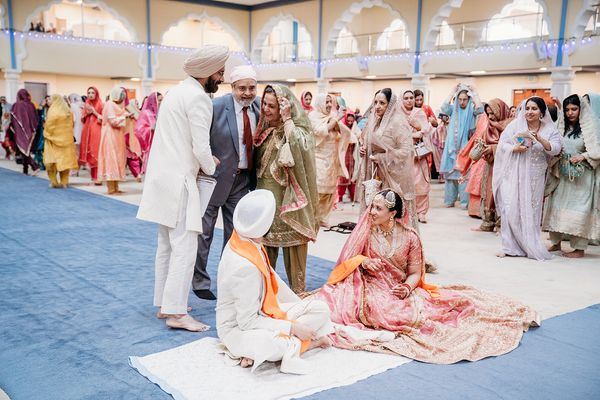
Weddings with two-part receptions also benefit. A traditional South Asian wedding with an afternoon ceremony followed by an evening sangeet-style reception often needs 10 to 12 hours because the events span a longer arc. A couple planning a sparkler exit at 11 p.m. and 4 p.m. ceremony wants coverage that spans the whole thing.
When to book 10 hours or more
- Guest count over 150 with a formal receiving line.
- Two-part receptions or extended traditions.
- Late-night exit (sparkler send-off, choreographed sparklers, or a getaway car).
- Couples who want getting-ready coverage from both partners' locations.
Second shooter versus additional hours
The upgrade decision is not always more hours; sometimes it is more shooters. A second photographer for the standard 8 hours costs roughly the same as adding 2 hours of solo coverage and covers different moments: one photographer with the groom while the other is with the bride during getting ready, or one at cocktail hour capturing guest moments while the other does couple portraits. For most Bay Area weddings above 120 guests, a second shooter for 8 hours delivers more value than a single shooter for 10 hours.
Coverage math for a $6,000 photography budget
For a couple with a $6,000 to $8,000 photography budget considering 8 versus 10 hours, the honest allocation math is: 8 hours with a second shooter (roughly $6,500 to $7,500 with a strong Bay Area photographer) beats 10 hours with a single shooter (roughly $6,000 to $7,000) for most wedding shapes. The second-shooter package captures more moments in parallel; the extra-hours package captures more time in series.
Where 10 hours wins outright is when the coverage arc genuinely spans more than 8 hours (e.g., you want getting-ready coverage from 12 p.m. and an exit at 11 p.m.). In that case, no amount of parallel shooting solves the problem; you need the coverage window to be longer.
How to decide, from your photographer's POV
The right test is to lay out your wedding-day timeline as a spreadsheet with the start time of every event: hair and makeup start, first look, ceremony start, cocktail hour, dinner service, first dance, cake cutting, exit. Then ask your photographer where they would like coverage to start and end. Almost every photographer will tell you honestly whether your day fits an 8-hour package or needs 10, and they will point out the specific moments that would be missed either way. Trust that recommendation. They have shot 200 weddings; you are planning your first.
Browse Vendors