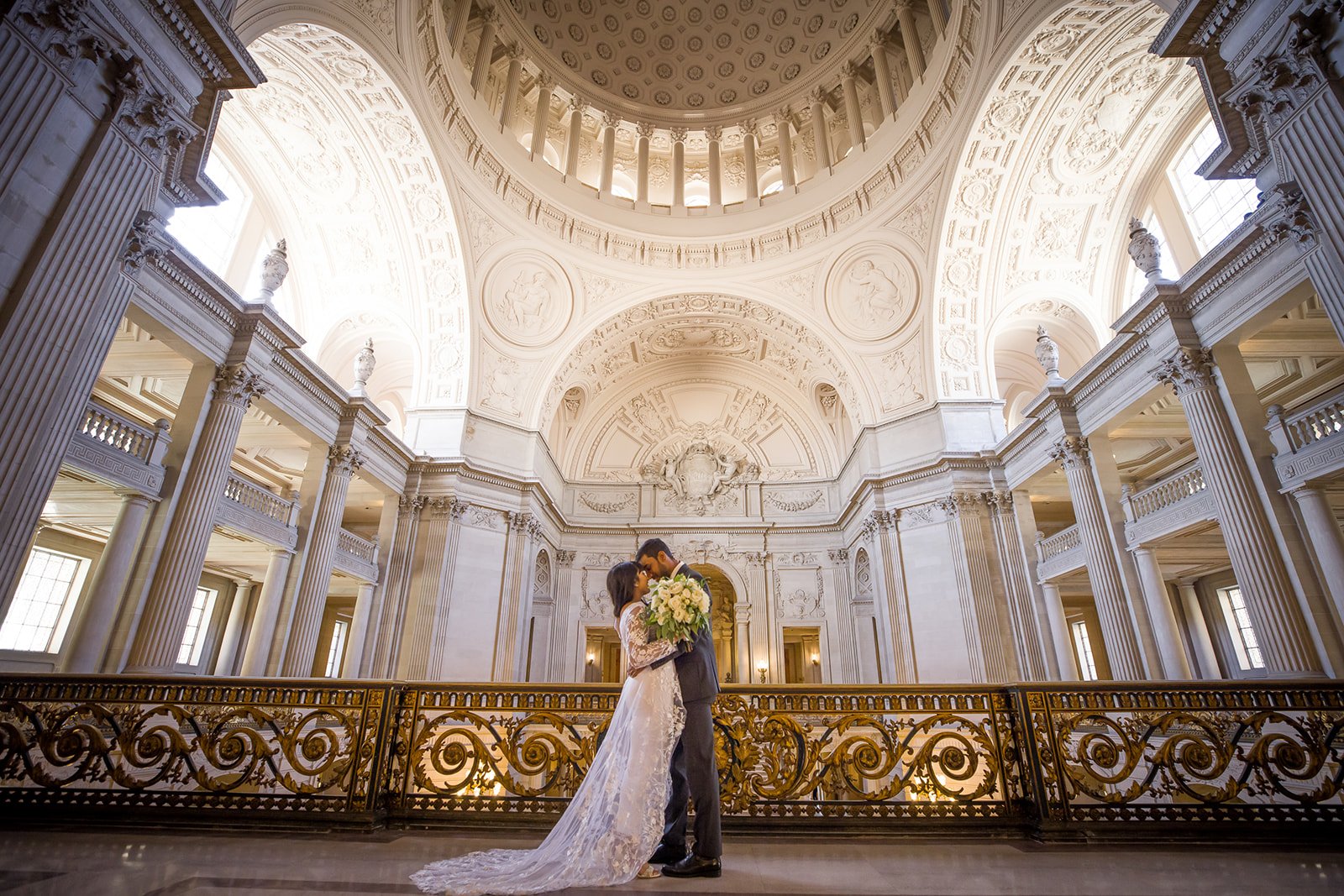
Eloping in the Bay Area can be as simple as a weekday City Hall appointment, or as layered as a sunrise vow exchange on the coast followed by dinner in wine country. The hard part isn’t the romance — it’s understanding the rules, the permits, and the logistics across multiple counties. This playbook walks you through what actually needs to happen (legally), and then gives you a short list of real Bay Area spots and paths that work well for modern elopements.
Quick reminder: programs and pricing change constantly. Every venue, park, and county office updates requirements without much notice — confirm current terms directly with the events team or county clerk before you book travel.
Step 1: Make it legal (California basics you can plan around)
In California, you don’t need to be a resident to marry here, and there’s no waiting period once the license is issued. The key planning constraint is that the marriage license is time-limited: it’s valid for 90 days from issuance (so don’t pull it too early if you’re planning a fall weekend on the coast).
You can obtain a California marriage license from any county clerk and use it anywhere in the state. After the ceremony, the officiant is responsible for returning the completed license for recording (timelines vary by county). If you’ll be traveling, build in buffer so your officiant can file promptly.
Public vs. confidential marriage license (why it matters for elopements)
One reason elopements feel easier in California is the confidential marriage license option. It can reduce how many people you need present (and what becomes part of the public record), which is helpful for weekday ceremonies and low-key outdoor vows. Ask the county clerk’s office what documentation and witness rules apply to the license type you choose.
Step 2: Pick your ceremony path (City Hall, civic architecture, or outdoors)
Most Bay Area elopements fit into one of three paths: (1) a county/city civil ceremony (fastest and most predictable), (2) a civic-building or venue rental that feels like City Hall but with more privacy, or (3) an outdoor ceremony in a park, beach, or overlook (most photogenic, but often the most permit-sensitive).

Option A: San Francisco City Hall civil ceremony (simplest logistics)
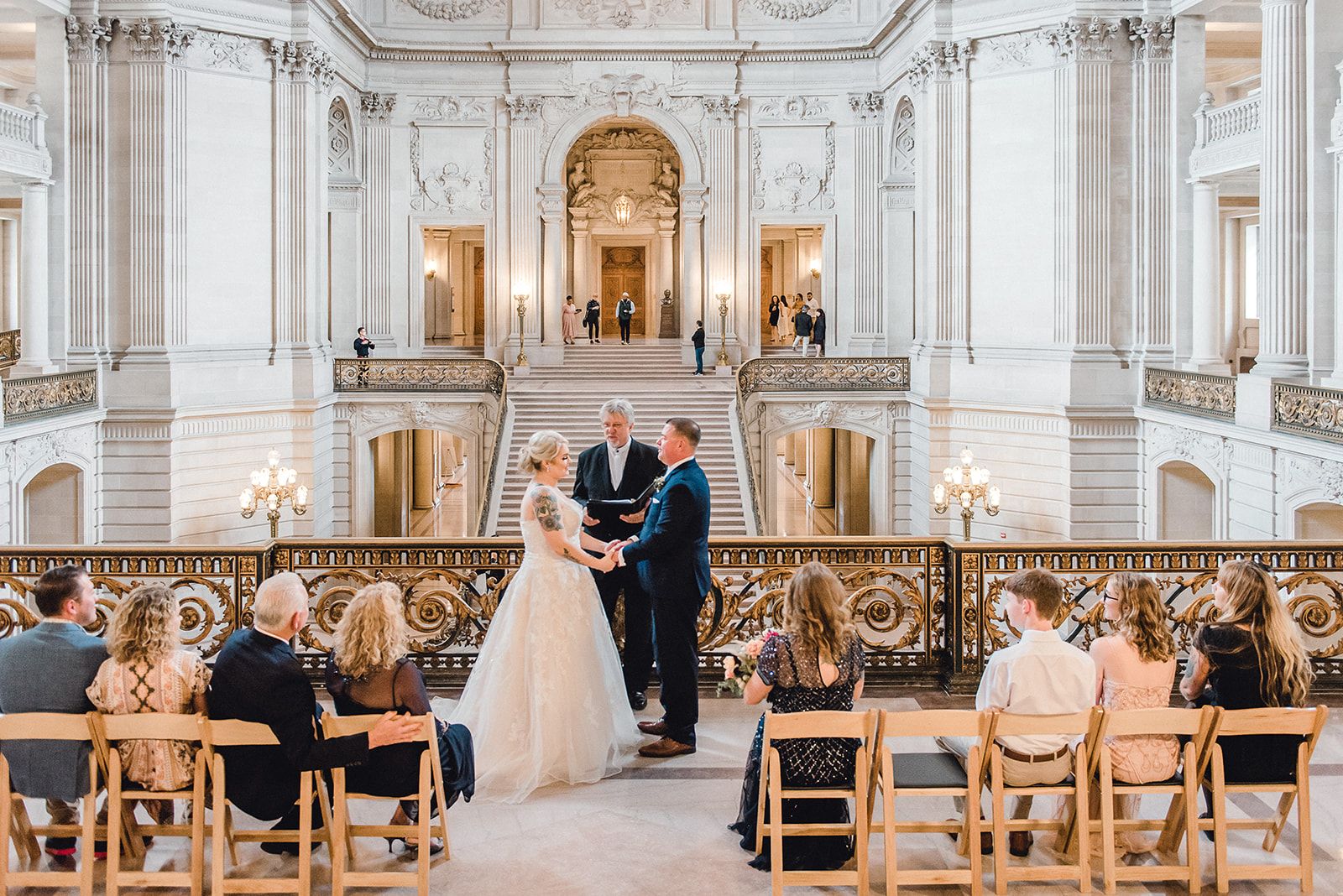
If you want something iconic and efficient, SF City Hall is hard to beat. Civil ceremonies require a reservation and are for small groups; SF.gov notes these in-person ceremonies are for 6 or fewer guests and that walk-ins are not allowed.
Plan your paperwork carefully: SF.gov emphasizes that you must present a valid original California marriage license prior to the ceremony, and that licenses are not available for purchase the same day as your ceremony appointment.
What to know before you book:
- Guest count: keep it tiny (SF.gov states 6 or fewer guests for civil ceremonies).
- Witness: SF.gov states you need 1 witness for a public marriage license; no witness is required for a confidential marriage license.
- Timing: arrive early (SF.gov asks you to arrive 15 minutes before your scheduled appointment).
Option B: SF City Hall one-hour or two-hour wedding packages (bigger guest list, more planning)
If you love the building but want a real guest list, SF.gov outlines a one-hour wedding package that starts at $1,200 (up to 100 guests) and a two-hour package that starts at $6,000 (up to 200 guests). These are rentals, not civil ceremonies, and you’ll need to bring your own officiant and handle your own marriage license.
Timeline-wise, SF.gov notes one-hour packages are Monday–Friday and should be booked at least 4 weeks in advance, while two-hour packages are Saturdays only and should be booked at least 3 months in advance. Treat those minimums as optimistic if you’re targeting popular dates.
Option C: Other Bay Area civic architecture (similar vibe, less crowded)
If SF City Hall feels too busy, you can get a similar architectural look elsewhere. One popular example is the Marin County Civic Center in San Rafael (Frank Lloyd Wright design). Ceremony rules and availability can be very specific, so treat it like a venue: call ahead, confirm guest limits, and confirm what’s allowed for photography.
Option D: Outdoors (permits are the real ‘venue’)
Outdoor elopements are where the Bay Area shines: coast, redwoods, vineyards, and hilltop views all within a few hours. But the permit system is what makes or breaks the day. Many parks distinguish between ‘just taking photos’ and ‘holding a ceremony,’ and some limit where you can place chairs, arches, or amplified sound.
If you want true privacy, consider sunrise on a weekday, pick a location with a defined ceremony site, and keep your setup minimal. A good photographer or officiant who does elopements regularly will often help you avoid ‘permit surprises.’

A short list of real Bay Area elopement locations (with notes)
Below are elopement-friendly spots couples use again and again. The ‘best’ one depends on your tolerance for wind, crowds, hiking, and permitting.
- San Francisco City Hall (San Francisco): Classic civil ceremony option for a quick, iconic legal wedding — keep the guest list small and book ahead.
- Marin County Civic Center (San Rafael): Beautiful civic architecture and outdoor areas; confirm ceremony availability and rules directly with Marin County.
- Muir Woods National Monument (Marin County): Redwoods in an easy-to-reach setting — permits and time-of-day constraints can apply, and crowds build quickly.
- Big Sur coastline (Monterey County): Dramatic cliffs and ocean views; treat this as a permit-and-safety-forward plan (wind, fog, and drop-offs are real).
- Point Reyes National Seashore (Marin County): Coastal trails, beaches, and headlands with huge variety — confirm which sites allow ceremonies and what group limits apply.
- Napa Valley (Napa County): Great for a ‘ceremony + dinner’ day; many couples do vows first (private) then celebrate at a restaurant or winery with a reservation.
How to choose an officiant for an elopement (and what to ask)
For elopements, your officiant is often part legal-safety net, part timekeeper, and part calm presence. Before you book, ask these questions (and get answers in writing):
- Will you help us confirm the correct license type and county filing process for our plan?
- Do you provide (or help us find) a witness if we need one?
- What is your travel fee structure for Marin, Napa/Sonoma, the Peninsula, and Monterey?
- If weather changes the plan, can you pivot locations/day-of (and what counts as a ‘pivot’)?
- After the ceremony, when and how will you return the completed license for recording?
A realistic Bay Area elopement timeline (sample)
Here’s a timeline that works for a lot of couples who want great photos without feeling rushed. Adjust it for sunset, tide charts, or fog season.
- 30–60 days out: book your ceremony/officiant and your photographer; decide whether you’re doing City Hall, a civic rental, or outdoors with a permit.
- 7–21 days out: confirm permit details (if outdoors), parking, and a weather back-up plan; finalize your ceremony script.
- 1–10 days out: obtain your marriage license (remember the 90-day validity window).
- Day-of: build a buffer for traffic and parking; do the ceremony first if fog/wind is unpredictable; celebrate afterward with dinner, a picnic, or a mini reception.
The bottom line
A Bay Area elopement is at its best when the logistics disappear. Get clear on the legal steps, choose a ceremony path that matches your guest count and risk tolerance, and then build your day around the light, the weather, and one memorable meal together. If you keep it simple and confirm requirements early, you’ll have a day that feels like you — not like an appointment.
Sources
SF.gov: Have a civil marriage or domestic partnership ceremony at City Hall — https://www.sf.gov/have-civil-marriage-or-domestic-partnership-ceremony-city-hall
SF.gov: Book City Hall for your wedding or event — https://www.sf.gov/book-city-hall-for-your-wedding-or-event
Browse Vendors