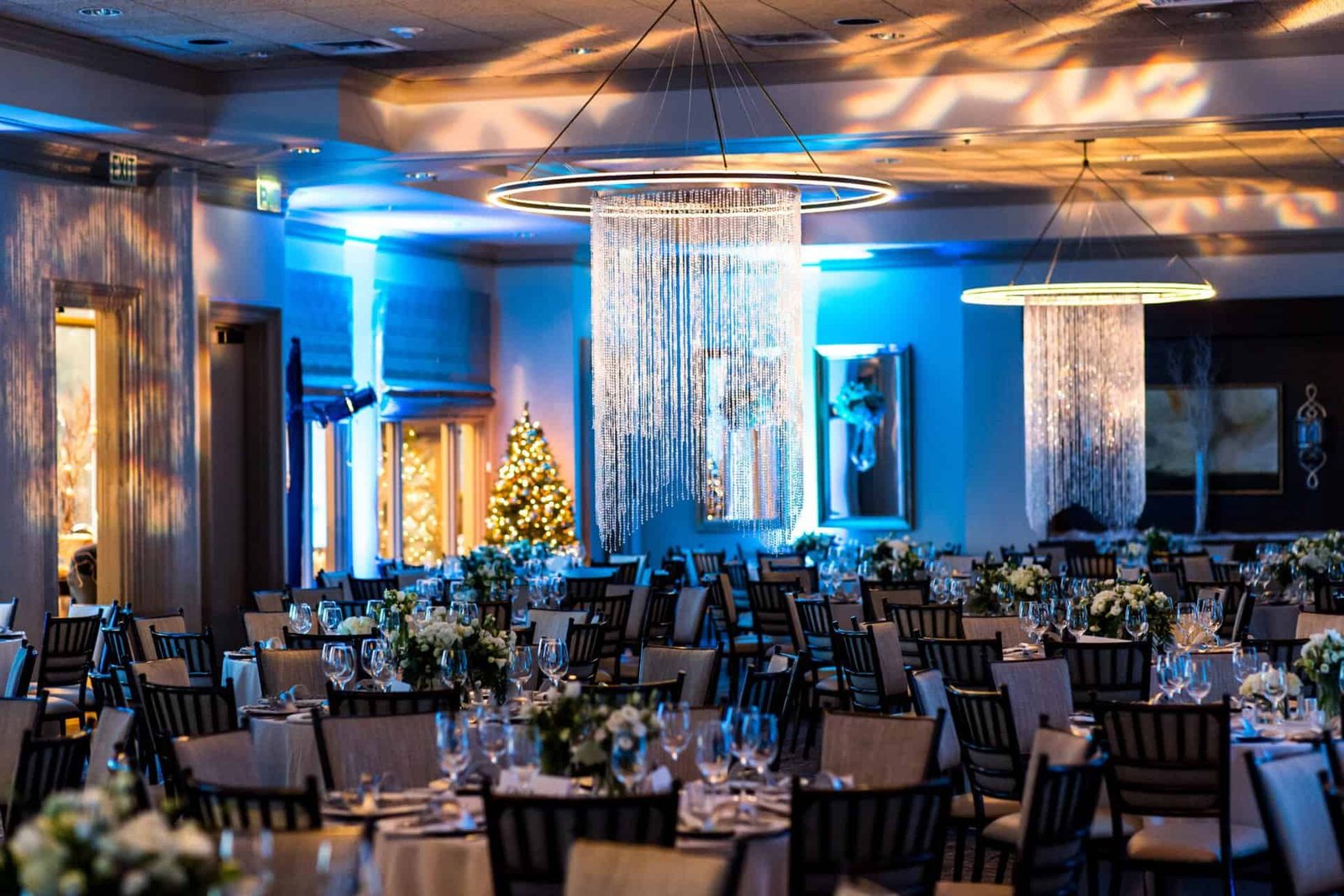
If you’ve ever walked into a Bay Area reception and thought, “Okay… this looks expensive,” there’s a good chance lighting did more of the heavy lifting than you realize.
Good lighting doesn’t just make a room brighter. It shapes the mood, hides what you don’t want to see (hello, beige carpet), and makes everything from florals to your photos look more intentional.
In a region where venues range from industrial warehouses in San Francisco to vineyard barns in Sonoma, lighting is the easiest way to make your space feel designed rather than merely decorated.
This guide breaks down what “magazine-ready” wedding lighting actually is, what it typically includes in the Bay Area, and how to spend smart.
What wedding lighting design really means (it’s not just uplights)
Lighting design is the plan for how your reception will feel when guests walk in, when you enter, and when dancing starts.
In practice, it usually includes:
- Ambient light (the overall glow of the room)
- Accent light (highlighting specific areas like florals, cake, or the sweetheart table)
- Task light (making sure people can actually see during dinner and speeches)
- Party light (movement and color shifts once dancing begins)
A true lighting designer thinks like an interior designer: they look at the room, identify what needs to be emphasized, and build layers so the space photographs beautifully from every angle.
The 8 lighting moves that make Bay Area receptions look editorial
1) Layered warm uplighting (not the “purple nightclub” look)
Uplighting gets a bad reputation because it’s often used as a blunt instrument: a dozen lights, one color, blasted at the walls. Editorial lighting is more nuanced.
A designer will typically:
- Use warm white or soft amber as the baseline
- Adjust brightness so the walls glow instead of screaming
- Place lights to create depth (especially in larger ballrooms and warehouses)
This is especially helpful in San Francisco venues with darker interiors or lots of brick/concrete.
2) Pin-spotting florals and tablescapes
Pin spots are small, focused lights aimed at centerpieces, the cake, or the sweetheart table. They’re one of the biggest “why does this look so polished?” secrets.
Without pin spots, your expensive florals can disappear in dim rooms. With them, they pop in person and in photos.
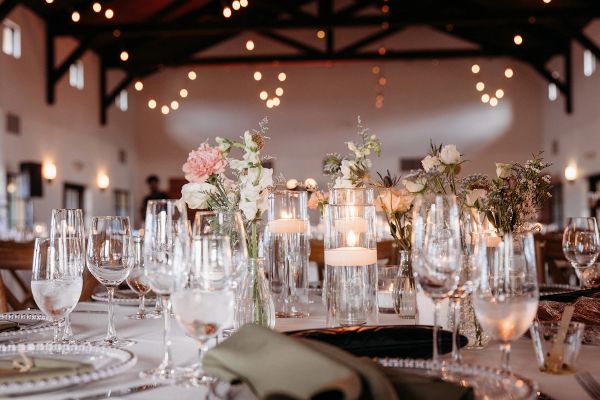
3) Bistros/market lights that feel intentional (and not like a backyard)
String lights are everywhere in Northern California, but the difference between “cute” and “editorial” is layout and scale.
Editorial string-light installs usually:
- Use consistent spacing and straight runs
- Align to architectural lines (beams, rafters, tent peaks)
- Pair with other layers (uplights + pin spots) so the room isn’t lit by strings alone
They’re a natural fit for barn-style venues in Marin, Sonoma, and Napa, plus outdoor patios and tented receptions.
4) Statement chandeliers or clusters
One well-placed chandelier (or a cluster above a dance floor) is a shortcut to “designed.” It creates a focal point in photos and gives the room a sense of center.
This is popular for:
- Tents (especially clear-top tents)
- Warehouse spaces that need softness
- Venues with high ceilings where décor can feel swallowed
5) Pattern washes (“gobos”) that add texture
A gobo is a patterned projection on a wall, ceiling, or dance floor (think: leafy shadows, art-deco shapes, or a subtle monogram). The key is restraint: a soft texture can make a plain wall look like a set.
Use gobos when:
- Your venue has large blank surfaces
- You want visual interest without adding physical décor
- You’re working with a minimalist palette and want depth
6) A properly lit dance floor (that still photographs well)
Dance lighting is where a lot of vendors go off the rails. The goal isn’t “bright,” it’s energy.
A good setup usually includes:
- A base of flattering ambient light so faces aren’t lost
- Movement lights or color changes timed for dancing
- Controlled beams (so your photographer isn’t fighting laser-level glare)
If you want that “party in the photos” look, talk to your lighting team and photographer together.
7) Draping + lighting as a pair
If your venue has something you don’t love (storage doors, acoustic panels, odd corners), drape can hide it — but drape without lighting can look flat.
A lighting team that also does draping can create a clean, high-end wall and then wash it with warm light so it looks like part of the venue.
8) Candlelight that’s safe and actually visible
Candlelight is romantic, but many Bay Area venues have restrictions (especially in historic spaces and wildfire season). If real flames aren’t allowed, the best pros use high-quality flameless candles and then build lighting around them so they read on camera.
What wedding lighting costs in the Bay Area (and why quotes vary)
Pricing depends on your venue, ceiling height, power access, install time, and how custom the design is.
As a rough, Bay Area-relevant rule of thumb:
- Foundational lighting (uplights + a few pin spots): often starts around the low-thousands
- Full design (uplighting + pin spots + strings or chandeliers + dance lighting): commonly lands in the mid-thousands and up
You’ll also see quotes jump when:
- The space needs rigging (hanging lights safely from beams/ceilings)
- The install requires a big crew or long access window
- Your venue has limited power and needs distribution
For context on overall wedding budgets, The Knot’s 2026 Real Weddings Study reported an average wedding cost of 34,200 (based on couples who married in 2025).
Bay Area weddings often exceed national averages, but the key takeaway is this: lighting is one of the few line items that affects guest experience and photography at the same time.
Bay Area lighting teams worth knowing (and what to ask)
If you’re building a shortlist, here are a few Bay Area–based event production and lighting companies to look at:
- Got Light (event lighting + wireless uplighting and pin spotting, plus custom fabrication)
- JL Imagination (South San Francisco; lighting and full AV production)
- Bright Event Rentals (Bay Area location; offers lighting & chandeliers along with rentals)
Every company’s program changes — confirm current offerings, access requirements, and terms directly with their events team.
Questions that separate “equipment rental” from design
Bring these to your inquiry call:
- What’s your plan for layering light? (not just “how many uplights?”)
- How do you handle power and safety at my venue?
- Will you pin-spot tables and florals? If yes, how many?
- What does your install day look like? Crew size, access time, strike time
- How do you coordinate with my photographer and planner?
How to get the “magazine look” without overspending
Prioritize the photos that matter most
If you’re trying to keep the budget sane, light the moments that get photographed heavily:
- Sweetheart table
- Head table (if you have one)
- Cake
- Dance floor
- Any “feature” installation (a floral arch, bar, or escort wall)
Spend on height and focal points
In high-ceiling venues (common in SF warehouses and hotel ballrooms), décor can feel small. A chandelier cluster or a well-designed overhead install can do more than doubling your floral spend.
Use warm white as the default
Warm light flatters skin tones and makes spaces feel expensive. If you want color, save it for dancing.
Don’t let lighting and DJ work against each other
Some DJs bring basic lights; some lighting designers provide dance lighting. Decide who owns what so you don’t pay twice or end up with mismatched systems.
Quick checklist: lighting-friendly Bay Area venue features
When you tour venues, note these:
- Are there rigging points or beams for hanging installs?
- What are the venue’s candle/fire rules?
- How early can vendors access the space for install?
- Is the ceiling height realistic for strings or chandeliers?
- Where are the power drops — and are they sufficient?
If you can answer those five questions, you’ll get more accurate quotes and a smoother install.
Final thought
In the Bay Area, lighting is often the difference between “we decorated a venue” and “we designed a room.” If you want a reception that feels cinematic in person and looks editorial in photos, start thinking about lighting earlier than you think you need to — ideally right after you book your venue.
Browse Vendors